Tracking Every Bite: How Food Traceability Enhances Safety and Efficiency in the Supply Chain
June 21, 2024
Enhance Food Safety with Advanced Traceability Systems
Learn more about how Wiliot’s IoT Pixels form the foundation of an advanced food traceability system.
What is the Importance of Food Traceability?
Food traceability is the ability to track the movement of a food product and its ingredients through all steps in the supply chain, both forward and backward. Traceability involves documenting and linking the production, processing, and distribution chain of food products and ingredients. Track and trace technology is employed throughout the supply chain to monitor products and ensure food safety as items travel from farm to table.
Effective food traceability systems can play a major role in addressing multiple issues that plague the way the world’s food is produced, transported, distributed, and sold to consumers. Following are the areas in food production and distribution that are enhanced by a traceability system.
Food quality - Tracking food items and ingredients as they move through the supply chain enables the adoption of more stringent quality controls. Items not meeting quality standards, like temperature and dwell time compliance, can be removed from the supply chain at any point, allowing companies to offer superior products to consumers. Delivering quality food maintains customer satisfaction and promotes sales.
Food safety - The critical issue of food safety is directly addressed through traceability systems. Effective tracking of ingredients and finished products allows companies to pinpoint and remove contaminated items from the supply chain before they affect public health or contribute to outbreaks of foodborne illnesses.
Waste reduction - Food traceability systems promote waste reduction in several ways. Tracking the movement of perishable food items can ensure they reach their destination before spoilage occurs and enable alerts for process incompliance to help avoid spoiling products. . Efficient tracking can help producers coordinate ingredient delivery and workflows to maximize production and minimize waste.
Supply chain efficiency - Traceability systems can have a significant effect on the efficiency of the food supply chain. Producers and distributors can use tracking data to ensure the right products are delivered to the correct supply chain partners on time. Traceability data may enable companies to consolidate or reroute shipments to optimize deliveries.
Benefits of Food Traceability
Let’s take a detailed look at the major benefits of food traceability.
Consumer safety
The ability to track items throughout the food supply chain can have a tremendous impact on consumer safety. Continuous monitoring possible with IoT traceability solutions enables producers and distributors to ensure products are kept at the correct temperatures so they are fresher when delivered to retail establishments, restaurants, and consumers. Fresher products equate to increased loyalty, satisfied customers, and increasing your bottom line.
Perhaps an even more important benefit of food traceability is the information it makes available that can be used for food recalls to keep contaminated products from reaching the shelves. Tracking items allows dangerous products to quickly be identified to address an illness outbreak or contamination. Public safety is enhanced by the ability of food traceability systems to control the spread of foodborne illnesses, and also reduces excessive waste by enabling businesses to be more knowledgeable about which specific pallets or cases of merchandise should be removed from the supply chain.
Regulatory compliance
Companies in the food processing, production, transport, delivery, and retail sectors are being increasingly held to regulatory standards such as the U.S. Food Safety Modernization Act (FSMA). Specifically, FSMA section 204 defines the Food Traceability Final Rule and establishes recordkeeping requirements for entities that manufacture, process, pack, or hold foods on the Food Traceability List (FTL) offered for sale to U.S. consumers. The goal of FSMA and similar legislation in other countries is to enhance public health protection by improving the food safety system from farm to consumer.
Constructing a stringent traceability framework enables companies and government agencies to quickly detect and respond to foodborne illness outbreaks to protect the consumer. This objective can be met with enhanced tracking, monitoring, and record-keeping to minimize society’s exposure to unsafe food or contaminated products. Employing an IoT solution eliminates manual chain of custody logging, like counting and scanning, that can result in errors and negatively affect the food supply chain, and can add the additional value of temperature monitoring.
Supply chain efficiency
Implementing a traceability system can lead to substantial gains in supply chain efficiency. While the previously discussed benefits concentrate on ensuring food safety and consumer health, this benefit directly addresses a company’s bottom line. A more efficient supply chain usually translates into streamlined operations and increased profits.
Specific factors that contribute to enhanced supply chain efficiency include:
Reducing labor costs by eliminating the need for manually scanning, counting, and recording product levels and movement;
Providing additional time for employees to move product by automating tracking procedures;
Minimizing fuel usage and transportation costs by understanding the location of supply chain items at all times and optimizing their movements.
How Food Traceability Works An effective and efficient food traceability system relies on the coordination of multiple technologies to provide the tracking functionality that provides the necessary visibility into the supply chain. The following technologies can be used in the construction of a food traceability system. In some cases, specific features of the technologies may hinder their ability to implement the most productive and cost-efficient traceability systems.
Radio Frequency Identification (RFID) - Traditional RFID technology has been used for creating tracking and traceability systems. While it provides vital information about product location and movement, it relies on an expensive infrastructure including dedicated RFID readers. The scanning process is usually done at chokepoints which provides only a limited window of visibility due to the small quantity of read points.
Traditional IoT - Internet of Things (IoT) devices such as Bluetooth beacons offer another method of implementing food traceability systems. While Bluetooth beacons negate the challenges of the traditional RFID manual scanning process, as they broadcast continuously in real-time, the main issue with employing this technology is the expense of IoT tracking devices and maintenance. The cost makes it prohibitive to provide visibility on a unit or case-level basis, negating many benefits of the system.
QR codes and barcodes - This legacy technology involves time-consuming and potentially error-prone manual scanning to track product movement. Scanning is performed at chokepoints and issues such as lost or broken scanners, inaccurate or missed manual scans, or label printing errors can significantly impact the visibility into the supply chain.
Wiliot’s Data Visibility Platform - At the heart of this visibility platform are IoT Pixels, advanced IoT devices that combine with Wiliot’s dedicated cloud platform to address the issues presented by alternate technologies. The IoT Pixels are postage stamp-sized computers that combine the economies of scale of traditional RFID, alongside the labor-free scanning architecture of Bluetooth beacons, in a low-cost and battery-free sticker form factor. We will take a closer look at the distinctive features of Wiliot’s IoT Pixels in a subsequent section.
Step-by-step process
The following infographic illustrates a food traceability system in action.
A Case Study
This webinar conducted by Wiliot and the Food Safety Magazine highlights the need for food traceability and the benefits of implementing a system built on Wiliot’s IoT Pixels.
Features of Wiliot’s Visibility Platform
Let’s look at the features that distinguish the Wiliot Visibility Platform and make it an excellent choice when developing a system to track products through the entire food supply chain.}}
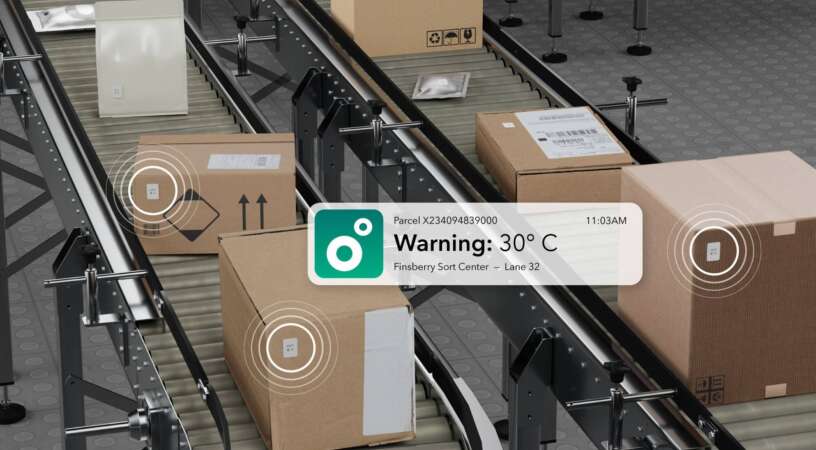
Real-time tracking - The use of Bluetooth technology allows items to be tracked in real time. The IoT Pixels eliminate the need to manually scan items by communicating with low-cost, Bluetooth-based devices within range. Data is then transmitted to the Wiliot cloud for processing and AI-based data analysis. This approach reduces infrastructure costs and increases tracking granularity.
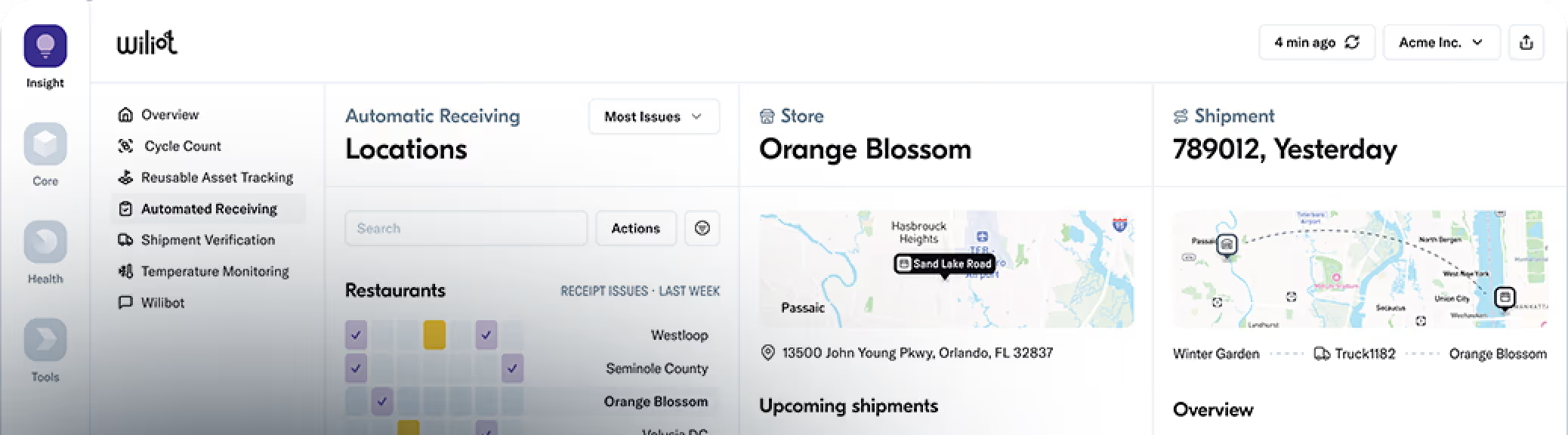
Continuous visibility - Real-time tracking and data transmission to the cloud provides continuous visibility into the inner workings of the food supply chain, without the need for manual scanning. Companies can obtain insights into product location, movement, and condition inside facilities, transport vehicles, and storage areas that allow better decision making to ensure food safety and operational efficiency.
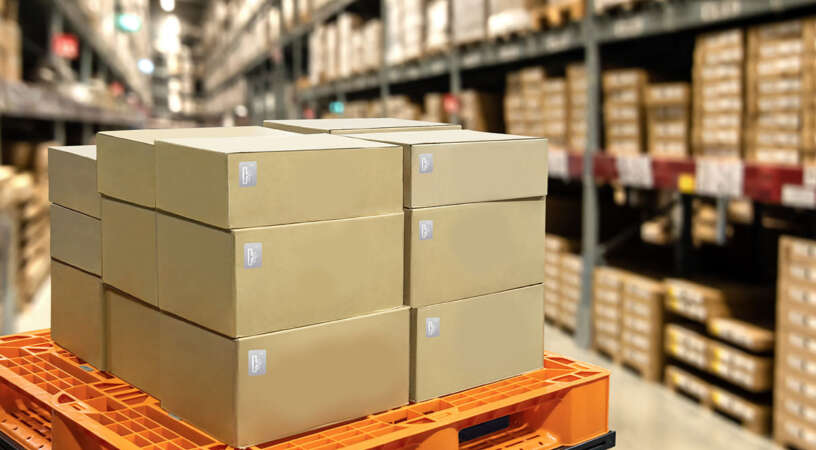
Flexibility - IoT Pixels are small, measuring 2.8 x 4.4 cm with a thickness of 0.2mm. Their size makes them extremely flexible as far as the type of products they can be used to track. Battery-free IoT Pixels offer additional flexibility by removing the need to replace batteries. The Pixels are delivered on reels for easy application to pallets, cases, containers or individual items.
Scalability - A food traceability system based on IoT Pixels is designed for scalability. The cloud can handle communication with an unlimited number of IoT Pixels, allowing a business to start small and expand the system at will. A common deployment may start by adhering IoT Pixels to pallets, then advancing to the case or item-level for more granular signals. Companies can implement a pilot program and after seeing the demonstrable results, move to a more comprehensive implementation.
Advanced sensing capabilities - The IoT Pixels work together with AI in the Wiliot Visibility Platform to provide relevant, and customizable sensing insights. In addition to accurate location data, IoT Pixels can sense and track unit and case-level temperature and humidity to enable advanced product data such as item freshness and expected expiration dates. This feature gives Wiliot’s solution a tremendous edge over competing technologies when implementing a food traceability system.
Companies in the food industry can obtain multiple benefits from implementing a food traceability system. They can improve food safety, address compliance issues, and achieve supply chain efficiency resulting in cost-savings and increased profits. While multiple technologies can be used to deploy a traceability system, the features of Wiliot’s Visibility Platform make it a superior solution for companies looking to deploy a robust food traceability and monitoring system.
Contact us to learn more about the benefits of implementing Wiliot’s IoT Pixels to build a food traceability system that protects consumer safety, reduces waste, and enhances your supply chain management.
FAQs
Can Wiliot’s IoT Pixels be used with alternate cloud computing solutions?
Yes, the data from IoT Pixels flows via Wiliot's cloud-based Visibility Platform to all third party cloud software. The Wiliot Visibility Platform is the connector that joins its IoT Pixels and third party cloud platforms and applications. The Wiliot cloud is closely integrated into the software that runs on the tags and the ambient IoT readers/bridges and gateways, it enables end-to-end encryption and provides privacy, access control. It's not possible to bypass this security. Wiliot's cloud also provides a way to distill a continuous stream of low level signals that would be cost prohibitive for a third party application to access directly, into a set of events that signal relevant happenings such as location or temperature change.
What are the financial advantages of a food traceability system?
Multiple financial advantages can be enjoyed by companies implementing a food traceability system.
Real-time tracking and visibility enable companies to optimize their supply chains, saving the cost associated with fuel, labor, and transportation time.
Reduced food spoilage minimizes waste and increases the amount of products that make it to the shelf
The consistent delivery of fresh food improves customer loyalty and satisfaction, maintaining and growing the business.
Addressing potential food safety issues proactively reduces expensive recalls and possible lawsuits from consumers affected by contaminated products.
Why is IoT a better technology choice than RFID when implementing a food traceability system?
IoT technology is superior to RFID when implementing a food traceability system for several reasons. Using IoT technology eliminates the need for manual scanning or passing items past a dedicated and expensive RFID scanner by communicating via Bluetooth radio waves. IoT devices can continuously transmit data to provide real-time location information and an improved level of visibility regarding items moving through the supply chain.