What’s in the case study
Tha Challenges
To address the universal challenge of food waste, the grocery retailer wanted a view into how its time-and temperature-sensitive goods were transported and stored, aiming to improve its reputation for excellence by guaranteeing produce availability at peak freshness.
The Solutions
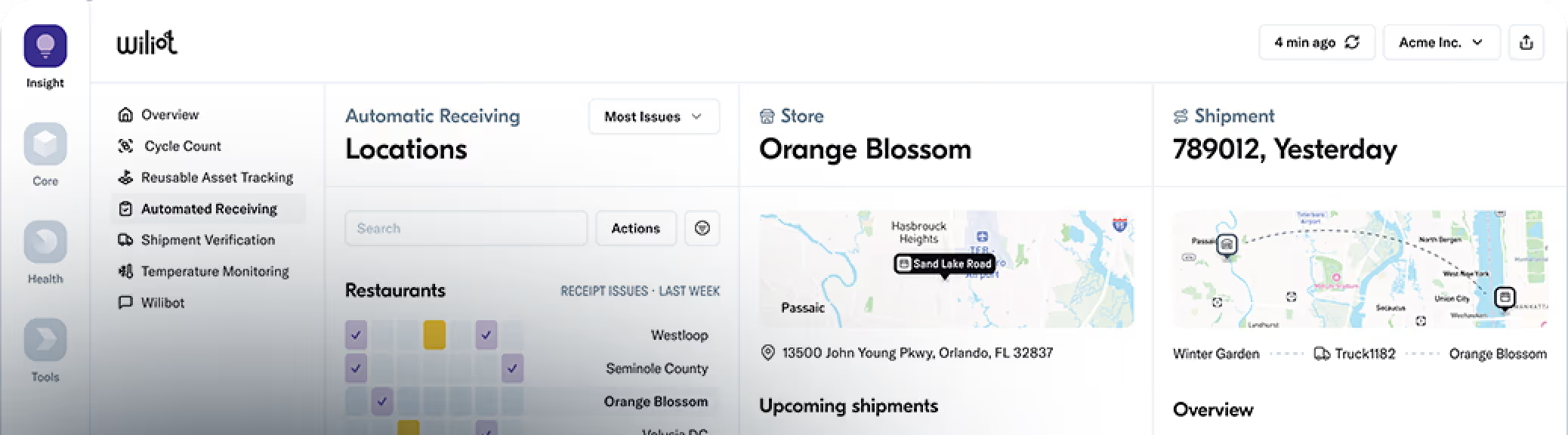
The Wiliot Intelligence Platform revolutionizes how grocery retailers monitor the temperature and location of their inventory, offering comprehensive insights down to the case level through automated, continuous monitoring and instant, actionable alerts.
How it Works
Wiliot IoT Pixels were applied to cases of strawberries, tracking their temperature and whereabouts from the distribution center, through transit, to multiple stores, providing high-resolution insights into the state of their goods.
The Outcome
The Wiliot Intelligence Platform promptly detected temperature and process compliance issues, allowing the retailer to tackle underlying problems as they arise, minimizing wasted inventory and ensuring fresher produce with more predictable availability.
The Benefits
Insights delivered by the Wiliot Intelligence Platform guaranteed that the retailer’s produce met the highest standards of freshness and quality, directly enhancing customer trust and enabling systematic elimination of food spoilage and waste causes.
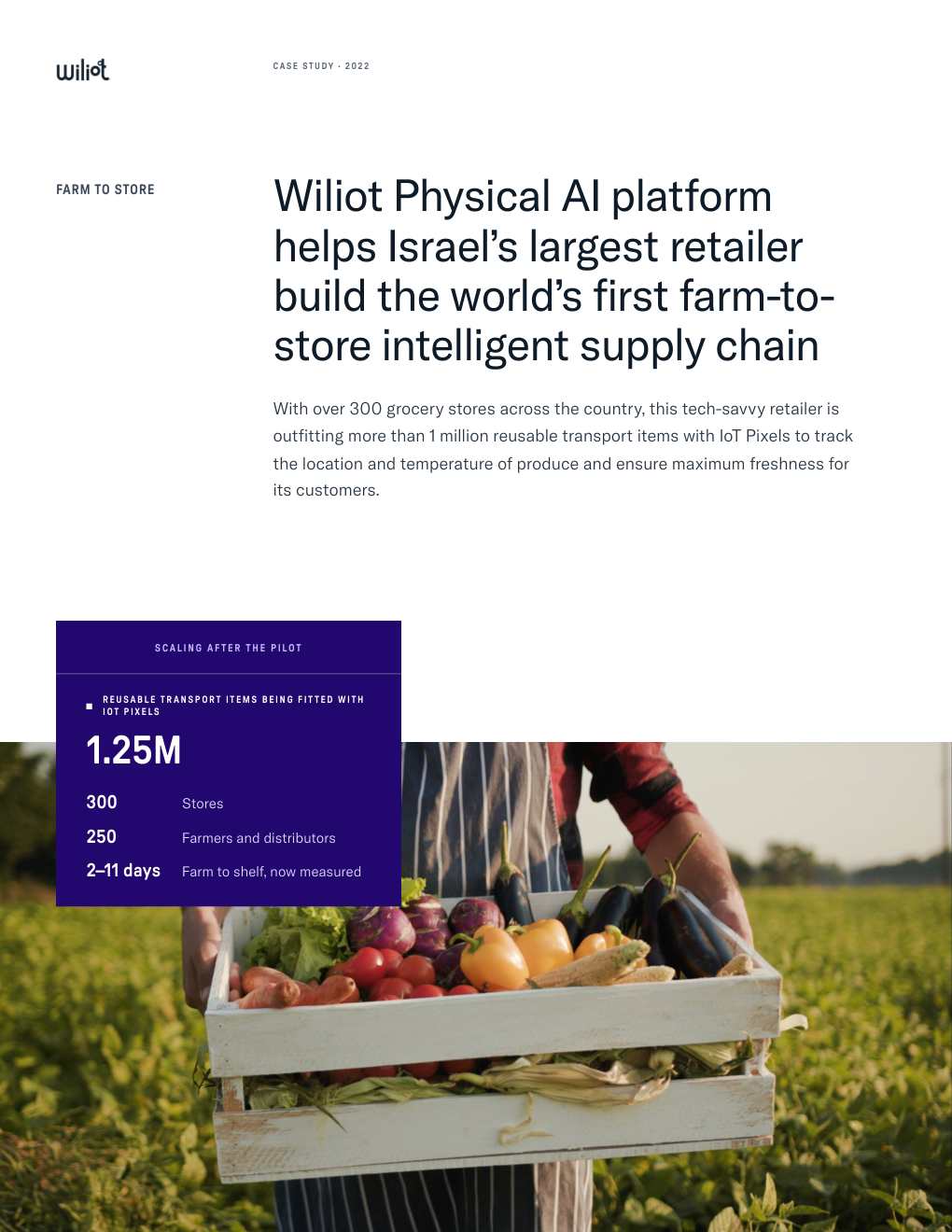
Two crates of produce picked from the same field on the same day can have very different shelf lives, and most grocers can’t see why. This case study shows how Israel’s largest retailer used Wiliot IoT Pixels on reusable crates to track the location and temperature of produce from the field, through the distribution center, to five stores. The pilot found that farm-to-shelf time varied from two to 11 days. It also exposed gaps in FIFO flow and showed where heat exposure was highest. Read how those insights led the retailer to roll out Wiliot across about 1.25 million crates, 250 farmers and distributors, and 300 stores, with a goal of halving time to store.