Advances in artificial intelligence (AI) and the related discipline of machine learning (ML) are paving the way for these technologies to be used in many new applications. Solutions built on these technologies can provide extensive benefits for businesses operating in the retail sector. This includes companies in the quick service restaurant (QSR), grocery, apparel, airline, consumer packaged goods (CPGs), and post and parcel industries.
Ambient IoT opens up a direct connection between AI tools and the vast physical world of the Things we interact with constantly, food, medicine, clothing, even house and car parts. This connection bypassed the limits of command line interfaces, text, images or video for complete digital to physical convergence.
Integrating the capabilities of ambient Internet of Things (IoT), connecting inventory, tools and other assets to the cloud, along with AI and ML furnishes the applications’ algorithms with fine-grained information with which to make more accurate predictions and decisions. Ambient IoT makes AI and ML solutions more powerful by using real-time data as its raw materials. This article concentrates on how AI and ambient IoT facilitate more efficient management in the QSR industry.
Why QSRs Need AI to Optimize Their Businesses
QSRs face multiple issues that impact their profitability and ability to successfully run their businesses. Let’s look at the most important issues facing QSRs that can be addressed by AI solutions.
- It can be challenging to optimally staff a QSR so there are no shortages that affect customer service. Conversely, over-staffing increases costs or leads to dissatisfied employees who are sent home early.
- QSRs typically employ lower skilled workers who may be prone to making mistakes that impact operations and customer satisfaction.
- The high turnover rate in the industry often results in untrained workers being forced to perform essential duties potentially impacting operations, safety, and the customer experience.
- Customers expect product consistency which can be adversely affected by untrained or unskilled employees.
- Accepting poorly scheduled or unexpected deliveries may necessitate side-tracking employees with other responsibilities which can negatively affect the operation of the QSR.
- Managing and ordering stock can be challenging for QSRs. Inventory levels need to be able to support operations without ordering excessive stock which leads to waste and unnecessary costs.
- The cost of foods and other products required to run a QSR may fluctuate between vendors and present opportunities for a business to save money. The business may not have the time and resources to spend searching for better deals.
- Multiple factors can result in the expensive waste of food in QSRs. Spoilage from over-stocking perishable goods, storing products incorrectly, and making mistakes with orders that must be destroyed all lead to waste and excessive costs to the business.
What QSRs Need to Know about AI for Their Business
AI and ML can be used by QSRs in three main ways to address the potential issues discussed above. Each method of using the technology presents multiple opportunities to enhance operations, save money, or contribute to sustainability by eliminating waste and optimizing efficiency.
Scaling with Co-Pilots
Success in QSR is all about scaling process execution with consistency and quality. AI co-pilots are apps that can make suggestions, and provide prompts based on the changes in the inventory, assets and events in the store. With AI these co-pilots can augment the skills and decisions made at every level in a QSR, from individual crew managers, store managers, regional supervisors and even executive staff. At the store level this can be about correct handling of ingredients and merchandising materials combined with signals from the appliances used. At a higher level it can provide an overview across stores and supply chain benchmarking efficiency, safety and inventory handling across stores and regions.
Organizing information
AI and ML platforms are excellent at organizing and presenting information to address a wide variety of labor issues faced by QSRs. The ability of the tools to effectively classify data and provide relevant answers in response to queries makes them a good choice for onboarding and training. Examples of solutions based on AI and ML’s information organizing capabilities include:
- Automated onboarding agents that walk a new employee through the process with personalized assistance;
- Personalized training agents that focus on specific areas of the business;
- Knowledge agents that are available to answer questions about various aspects of the business;
- Performance-based coaching agents that evolve to reflect changes in user behavior and expertise.
Creating information
AI and ML take raw data and transform it through analytics into actionable information. These insights provide QSR decision-makers with opportunities to uncover hidden value that helps the business grow. A wide range of applications can be developed using data collected and created by AI platforms. Following are some of the ways AI-based applications can facilitate more efficient QSR management.
- AI can optimize workforce management through predictive analytics to identify peak hours and schedule staff appropriately to reduce over and under-staffing.
- Predictive analytics are also useful for predicting customer preferences and streamlining inventory management.
- Routine tasks may be automated to further reduce labor costs, reduce wait times, and improve operational efficiency
- Analyzing customer preferences and feedback regarding menu selections can help QSRs modify their offerings to address emerging trends and increase sales.
- AI can help create a more personalized customer experience by analyzing previous visits and offering targeted selections to increase customer satisfaction.
- Enhanced ordering processes are possible using chatbots and voice recognition systems that improve accuracy and minimize errors.
Integration with existing systems
The data and insights available from AI and ML tools can be integrated into existing systems to enhance and streamline QSR operations. The following examples demonstrate how AI solutions can be integrated with existing systems to provide additional benefits.
- Staffing applications will be optimized by the inclusion of data gleaned from predictive analytics to ensure the right mix of workers is always on hand.
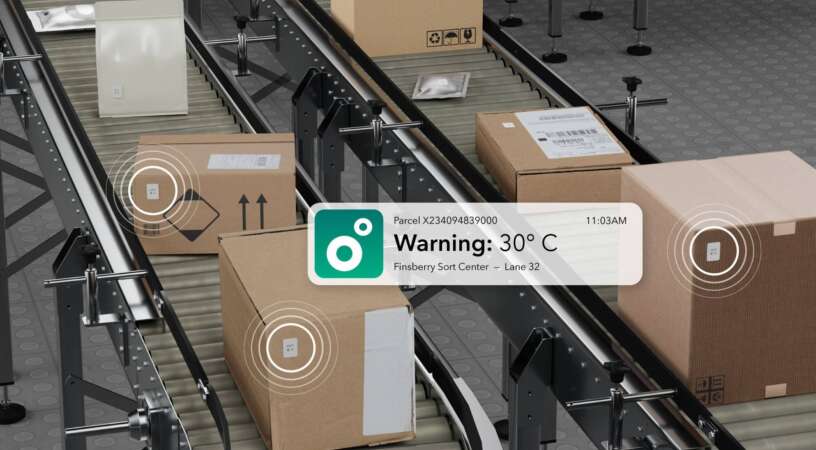
- Optimizing supply chain efficiency is possible by detecting missed or delayed shipments with the assistance of Ambient IoT solutions.
- Predicting inventory requirements facilitates better order forecasting and minimizes over or under-provisioning of QSR resources.
- Ensuring the freshness of all items is facilitated by AI and Ambient IoT solutions. The use of real-time data allows QSRs to move away from a first-in-first-out approach to using data to efficiently calculate freshness and inform inventory usage.
- AI can be used to enhance fraud detection in online ordering and payment systems.
- Data-driven decision-making is made possible through AI analytics and lets a QSR make informed choices regarding business strategies, prices, and customer promotions.
- Marketing campaigns benefit from the insights discovered through AI analytics that enable better targeting to attract and retain customers.
What AI and Ambient IoT Can Tell You About Your QSR
Ambient IoT solutions, such as Wiliot’s IoT Pixels, offer an effective and efficient method of obtaining the information necessary to leverage the power of AI and ML applications. These small IoT devices can be attached or embedded into virtually any item to facilitate real-time data collection regarding location, temperature, and humidity. This information is the essential ingredient that enables AI platforms to perform analytics and derive insights vital to QSR management.
Following are several examples of how Ambient IoT provides information that enhances QSR management and operations.
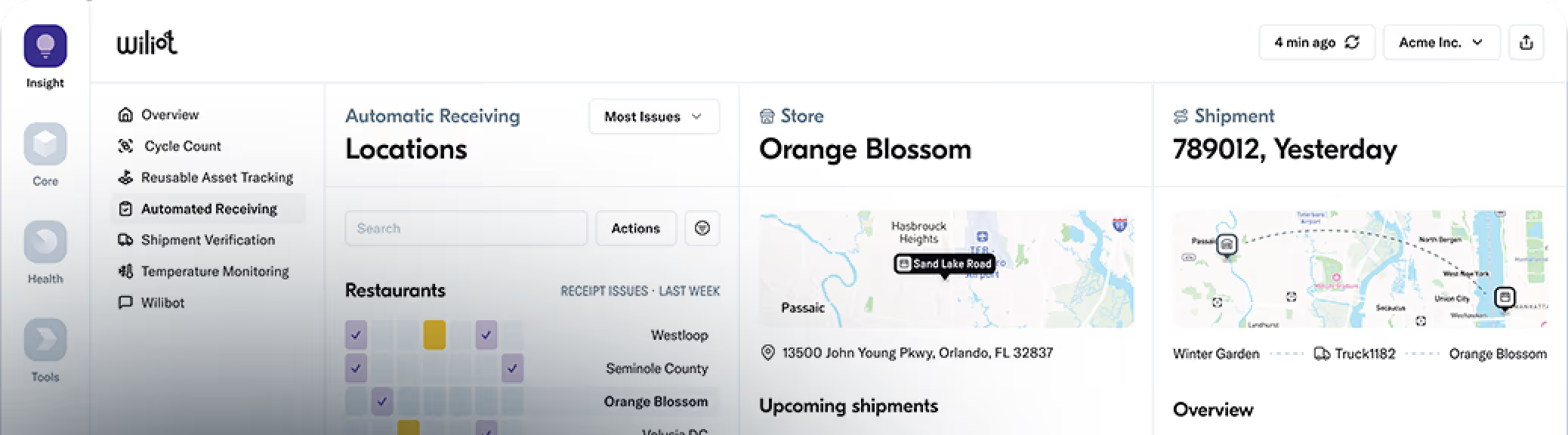
- Inventory can be tracked efficiently throughout the supply chain to eliminate surprise deliveries and ensure sufficient inventory is always available. Ambient IoT devices allow real-time data to be generated as an item moves through the supply chain so its location is always known.
- In the QSR business, understanding food freshness and quality is as important as knowing its location. Wiliot’s IoT Pixels can monitor location, temperature, and humidity to supply real-time data to AI applications. These in turn can determine if products have been frozen properly and stored appropriately so they are still fresh and can be available to customers.
- Ambient IoT systems can monitor overall customer patterns in a QSR establishment. This information can be used to optimize staffing, inventory, and menu selections to address the desires of the customer base.
- Allowing customers to download apps and opt-in to data collection presents the opportunity for personalization to enhance their experience. Combined with ML functionality, a personalized profile can be created and continuously refined to provide customers with a more satisfactory experience when visiting the QSR.
What Are the Top Risks of AI in a QSR Business?
Some potential risks may be associated with implementing AI in the QSR industry. These risks affect the business, its employees, and the customers whose patronage pays the bills. Companies implementing AI solutions need to be aware of the following possible risks.
- The ability of AI to automate tasks such as food processing or order taking may lead to lost jobs and reduced opportunities for workers in the industry.
- Effective use of AI in the QSR industry requires the collection and analysis of large volumes of customer data. It is essential to secure this information from unauthorized access or data breaches. Ambient IoT solutions used to collect data need to implement robust security by taking measures such as encrypting all data transmission.
- The initial cost of purchasing, implementing, and integrating AI technology into existing business systems and processes may be too expensive for smaller businesses. This can impact their ability to compete with larger organizations.
- Depending solely on technology to run a QSR risks operational disruptions if systems fail or make errors. Human oversight and intervention may be necessary to address unique or complex situations that AI solutions have not been trained to handle.
- Some staff and customers may be reluctant to interact with AI systems and prefer human interaction. AI solutions need to be introduced carefully to avoid negative customer responses and a potential loss of business.
- AI systems implemented in QSR businesses need to support the regulatory requirements of the industry. Failure to comply with regulations can lead to legal proceedings and fines.
- If AI systems are used for hiring or customer service, care must be taken to ensure the algorithms do not display bias that could lead to discrimination.
Conclusion
AI and ML solutions offer multiple opportunities for QSRs to optimize their business, compete more efficiently, and enhance the customer experience. The inclusion of Ambient IoT technology provides automated sources of real-time data with which to power the AI and ML platforms. While these solutions are accompanied by some potential risks, the benefits are too great to ignore.
QSRs looking to solidify and increase their market presence should strongly consider implementing AI solutions in combination with Ambient IoT technology. The advantages of modernizing the QSR infrastructure and business model outweigh the potential risks and put a business in a good position to thrive in the coming years.