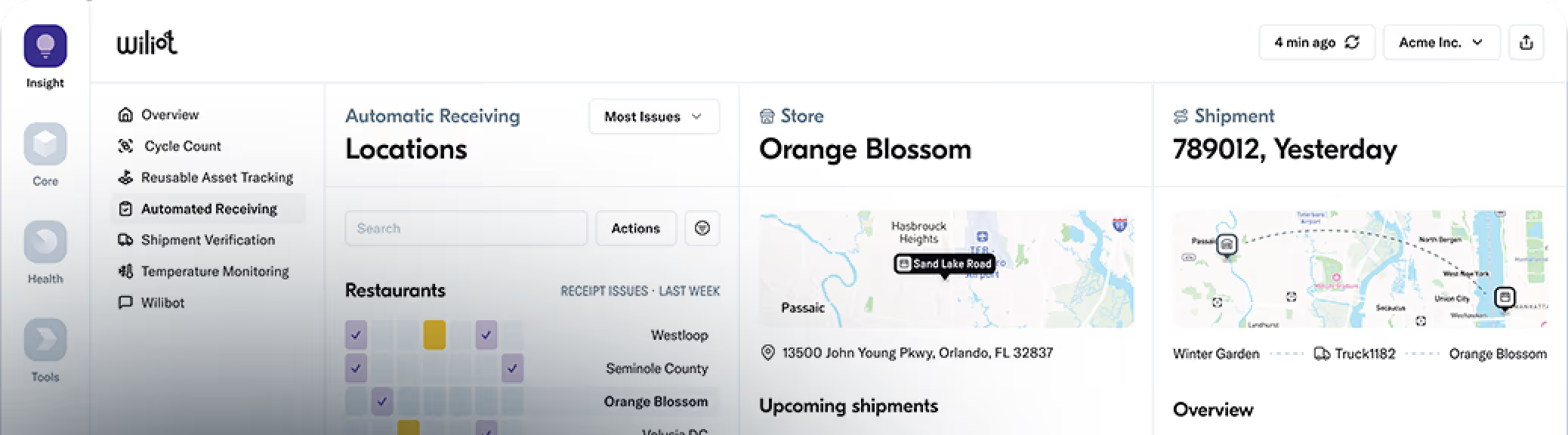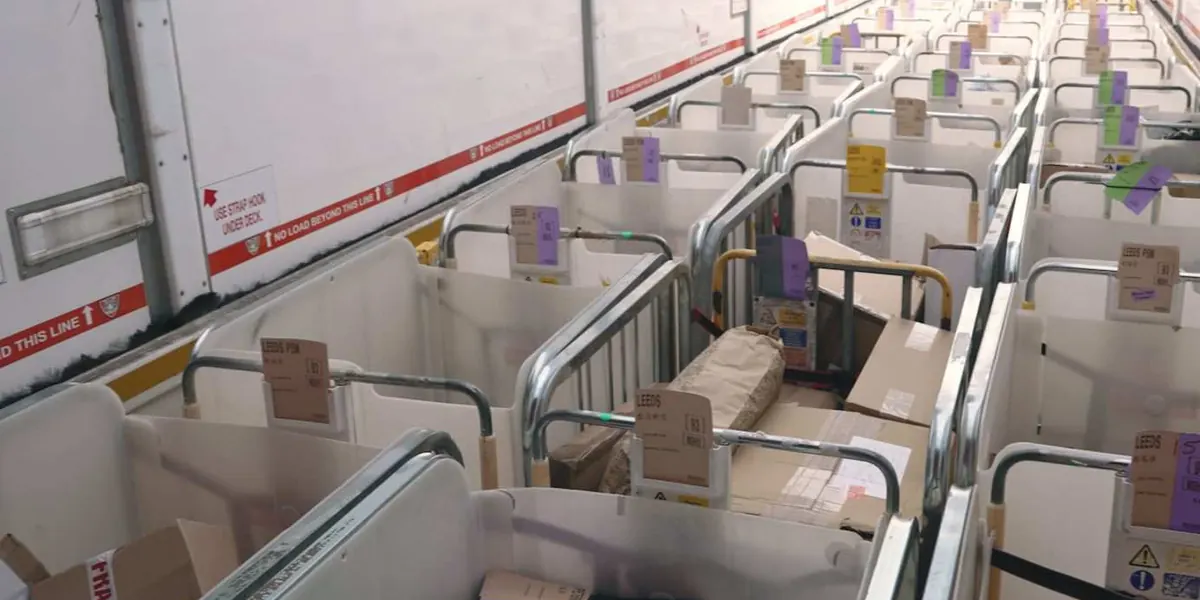



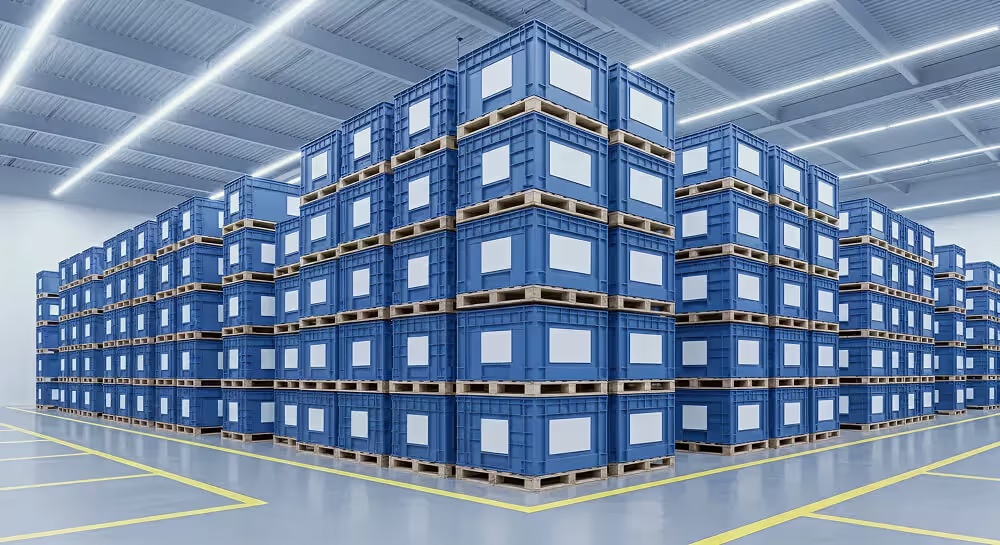









IoT Pixels turn your reusable transport items (RTIs) — roll carts, totes, racks, pallets, and containers — into assets. Track them as assets move between DCs, trailers, and stores, so you know where your fleet is at all times.
+25%
The fleet you didn’t know you had
+25%
The fleet you didn’t know you had
Royal Mail estimated it had about 720,000 rolling cages. After tagging with Wiliot, it found more than 900,000, 25% more than it had counted.
See the Royal Mail one-pager →$26M+
Millions in assets, finally accounted for
$26M+
Millions in assets, finally accounted for
At about £200 (~$265) per new cage, Royal Mail put more than £20 million (~$26 million) in assets under automated visibility, and has since avoided millions of pounds in cage purchases.
See the Royal Mail one-pager →$94M
Stop buying assets you already own
$94M
Stop buying assets you already own
Without visibility, networks over-buy reusable assets to cover losses they can’t see. Once every cage, tote, and cart is accounted for, organizations typically need a 30–40% smaller fleet.
See the Royal Mail one-pager →97%
Planning on real counts, not assumptions
97%
Planning on real counts, not assumptions
Live cage and load data now feeds Royal Mail’s network planning, which runs at 97% on-time departures and 92% on-time arrivals.
See the Royal Mail one-pager →Distribution networks lose 10–15% of reusable assets every year, and no one knows where they went.
Without visibility, teams over-buy to cover losses, then still make emergency purchases when shortages hit.
Assets pile up where they aren’t needed while other sites run short.
When assets cross facilities and partners, no one can prove who had them last.
See RTI location, dwell time, and losses by site, with clear accountability between facilities.
Live inventory by site, whether en route, in use, at customer sites, or in storage, so you allocate based on demand.
Get an alert when an asset is loaded onto the wrong trailer, before it causes a delay.
See what’s loaded on each truck against planned departures, cutting unused space, fuel, and carbon.



“With Wiliot’s innovation, all containers can be accounted for — the exact quantity loaded or unloaded at each stop, and back to the facilities that need them. This ensures all parcels always have a container ready for them.”
Reusable asset tracking is the process of continuously monitoring returnable assets — such as pallets, totes, roll cages, and containers — across the supply chain. Instead of relying on manual counts or periodic scans, assets are tracked in real time as they move between facilities, vehicles, and partners, providing full visibility into their location and status via Wiliot IoT Pixels and the Wiliot Physical AI platform.
Wiliot uses battery-free IoT Pixels attached to reusable assets, combined with wireless infrastructure and cloud analytics, to automatically detect and track asset movement. These assets continuously broadcast their location and condition to the Wiliot Physical AI platform without scanning or battery maintenance, creating a live system of record across the entire network.
Reusable asset programs often suffer from poor visibility, leading to asset loss, over-purchasing, and operational delays. Without real-time tracking, companies struggle to answer basic questions like where assets are, how many are in circulation, or which are missing — resulting in higher costs and inefficiencies.
Automated tracking delivers measurable improvements, including: Reduced asset shrink and loss; Optimized fleet size and utilization; Elimination of manual counting and reconciliation; Improved asset availability where and when needed. By replacing spreadsheets and scan-based systems, organizations gain continuous visibility and can make faster, data-driven decisions.
Reusable asset tracking is especially valuable in industries with high volumes of returnable transport items (RTIs), including: Retail and grocery supply chains; Logistics and 3PL networks; Postal and parcel operations; Manufacturing and distribution. These environments depend on reliable asset availability and benefit from real-time visibility across complex, multi-node networks.
Organizations typically achieve significant ROI by reducing shrink, avoiding unnecessary asset purchases, and improving operational efficiency. Real-time visibility enables better asset utilization, fewer delays, and lower capital expenditures — often delivering multi-million-dollar savings in large-scale networks.
Tell us how your cages, totes and racks move. We’ll map your first loop in weeks, not quarters.
Continuous visibility into every RTI — eliminating shrink, over-buying, and operational disruption
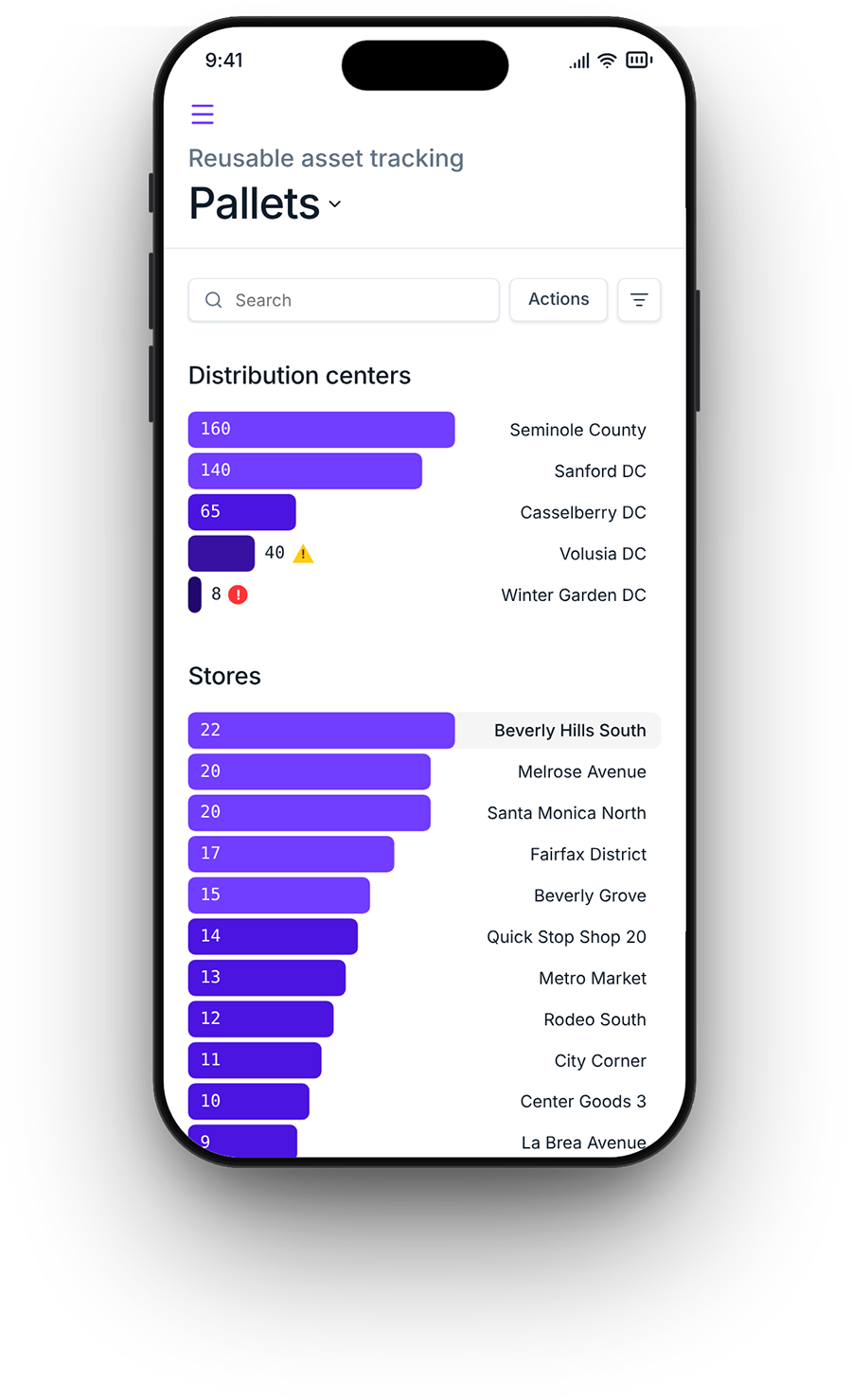
Distribution operations lose 10–15% of reusable transport items (RTIs) — roll carts, totes, racks, pallets, and containers — every year. Shrink, misplacement, and network imbalance leave distribution centers short on the assets they need to run daily operations.
The typical response: over-build the fleet by 30–40% as a buffer, and place emergency purchases when shortages still occur. Without visibility into where assets are and how they move through the network, shrink goes undetected, over-purchasing becomes the default, and delivery reliability suffers.
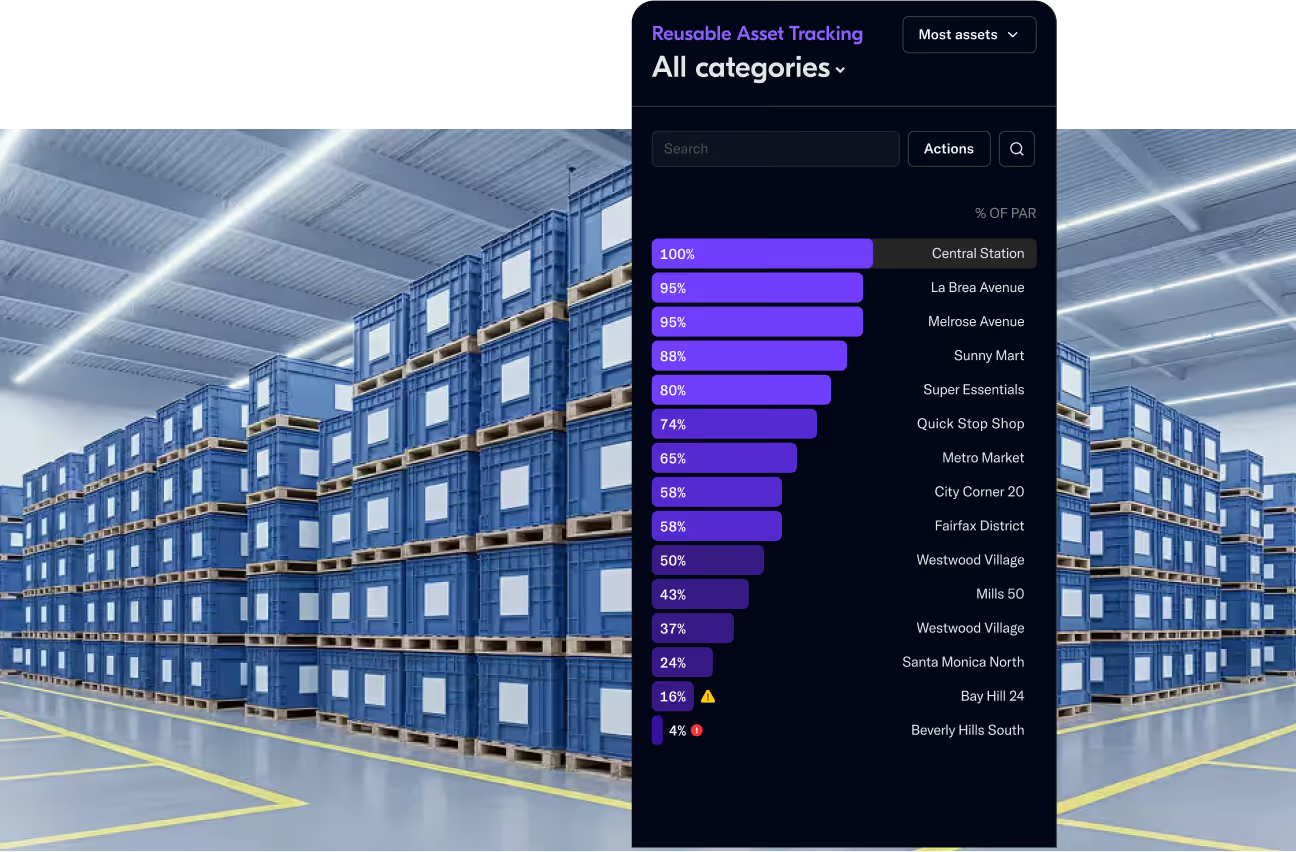
Wiliot's Reusable Asset Tracking solution delivers continuous, scan-free visibility into every RTI — from the DC to in-transit, to stores, to returns — using battery-free IoT Pixels and low-cost fixed infrastructure. Asset location is reported automatically without scanning or manual tracking. Operations gain precise insight into utilization, identify stuck or missing assets early, rebalance networks proactively, and right-size fleets based on real data — not worst-case assumptions.
The solution automatically:


Battery-free IoT Pixels are applied to RTIs once — during manufacturing, commissioning, or as a retrofit. Each asset then broadcasts its presence continuously as it moves through the network.
Wiliot's fixed infrastructure at DCs, stores, trailers, and cross-dock locations captures these signals without requiring any scanning or manual check-in. The Physical AI platform delivers a real-time view of every asset in the network — synchronized with your existing systems via cloud-to-cloud integration.

Challenge: Networks Managing hundreds of thousands of roll cages across national networks with no reliable visibility post-departure
Outcome: 50% shrink reduction; $10M+ in annual savings from fleet right-sizing and reduced emergency purchases

Challenge: Balancing roll cart and tote inventory across hundreds of stores in a hub-and-spoke network
Outcome: Significant fleet size reduction; improved delivery reliability from better asset availability

Challenge: Tracking totes, racks, and pallets in closed-loop supply networks with frequent handoffs
Outcome: 99%+ asset visibility; elimination of emergency purchases and delivery delays

Challenge: Managing high-value returnable racks and containers across a multi-tier supplier network
Outcome: Improved asset utilization; automated client billing based on verified asset movement data

Challenge: Tracking client-owned assets across shared networks with accuracy and accountability
Outcome: Accurate per-client billing; improved client satisfaction from transparent, documented asset tracking
Wiliot's Reusable Asset Tracking solution deploys quickly and scales flexibly — no network re-architecture required.

System live in weeks for an initial DC-to-store network.

IoT Pixels applied during asset manufacturing or commissioning, or retrofit tagging of existing assets at the DC.

Standard low-voltage installation using out-of-the-box networking infrastructure. Deployable at DCs, stores, trailers, and cross-dock locations.

Add locations incrementally without re-engineering the system. Flexible expansion across hub-and-spoke or complex multi-node networks.

Seamless cloud-to-cloud (C2C) data transfer into your existing ERP, WMS, or inventory platform. SDK and open APIs available for custom workflows.