(function(w,d,s,l,i){w[l]=w[l]||[];w[l].push({'gtm.start': new Date().getTime(),event:'gtm.js'});var f=d.getElementsByTagName(s)[0], j=d.createElement(s),dl=l!='dataLayer'?'&l='+l:'';j.async=true;j.src= 'https://www.googletagmanager.com/gtm.js?id='+i+dl;f.parentNode.insertBefore(j,f); })(window,document,'script','dataLayer','GTM-KX9RFV5L');

The Ultimate Guide to Reusable Transport Packaging

This guide covers the benefits, types, management strategies, sustainability considerations, and future trends of reusable transport packaging.

The Ultimate Guide to Reusable Transport Packaging

Introduction

In a world increasingly focused on cutting waste, improving operational efficiency, and building more sustainable supply chains, reusable transport packaging (RTP) has emerged as a smarter, greener alternative to traditional one-way packaging.


Whether it’s a returnable plastic tote moving through a warehouse or a rolling cart delivering inventory to a retail floor, RTP is about more than just containers—it’s about creating a closed-loop logistics system that works harder, lasts longer, and gives back.


Also known as Reusable Transport Items (RTIs) or Reusable Plastic Containers (RPCs), RTP solutions can significantly reduce packaging costs, eliminate waste, and give businesses real-time visibility into the movement of goods.

The transition from single-use packaging to reusable alternatives is helping to reduce supply chain costs in a few key ways, including:

  • Reduced replacement costs for wooden pallets, which are often broken or stolen;
  • Lower long-term packaging costs;
  • Waste reduction to minimize disposal costs;
  • Labor savings through the supply chain;
  • More efficient space usage;
  • Utilizing rolling carts to eliminate the need for equipment like forklifts at a delivery location;

It is equally important for companies to track their RTPs as they travel through the supply chain to achieve benefits like:

  • Reducing asset shrink and replacement costs;
  • Improving inventory accuracy and product availability;
  • Optimizing workflows and understanding asset location;
  • Turning RTPs into agents that provide actionable information and work to support business objectives.
  • Promoting sustainability by reducing waste and supporting the circular economy and closed-loop asset management programs.
Why this guide matters

Why this guide matters

This guide covers all aspects of reusable transport packaging and the ways it affects companies within their supply chains. We will discuss the advantages of transitioning from single-use packaging, which include cost savings, operational efficiency, and enhanced sustainability. We will show how businesses adopting RTPs benefit both themselves and society. In this guide, we’ll cover:

  • The most common types of RTPs (from roll cages to plastic totes)
  • How to choose, manage, and track reusable packaging
across your network
  • What it takes to build a successful RTP program—from pilot to scale
  • Real-world ROI: See how Royal Mail tracked 850,000 rolling containers using Wiliot IoT Pixels

Whether you're exploring returnable packaging for the first time or optimizing an existing program, this guide will help you move faster, reduce waste, and operate smarter.

Reusable transport packaging (RTP) refers to any shipping and handling container built for repeated use across multiple logistics cycles. These systems are designed to replace disposable or single-use packaging formats with durable, cost-efficient, and environmentally responsible alternatives. Common RTP products include pallets, crates, totes, bulk containers, roll cages, and returnable racks—each engineered to perform reliably under rigorous operational demands.


The Reusable Packaging Association defines RTP as packaging made from robust materials such as plastic, metal, or engineered wood, with the structural integrity to withstand multiple handling, shipping, and cleaning cycles. These assets are central to closed-loop or managed return systems and are often tracked to ensure accountability and maximize usage.


Unlike single-use packaging—which is discarded after one trip—RTP is part of a longer-term strategy to reduce waste, increase inventory control, and support supply chain sustainability.

The following table summarizes the many differences between RTP and disposable or
single-use packaging.

Understanding Reusable Transport Packaging

Future Reusable Transport Packaging (RTP) Single-Use Packaging
Lifecycle Multi-use over extended periods One-time use
Cost Structure Higher initial cost, long-term savings Lower initial cost, high recurring spend
Materials Durable plastics, metals, engineered wood Cardboard, thin plastics, polystyrene
Logistics Requires return or reuse process One-way, no return required
Environmental Impact Supports circular economy, reduces waste Contributes to landfill and CO2 emissions
Customer Appeal Signals sustainability commitment Increasingly seen as wasteful
Regulatory Readiness Aligns with evolving packaging legislation Exposed to bans, taxes, and compliance risk

The Business Case for Reusable Packaging

Organizations across retail, manufacturing, logistics, and food distribution are shifting to reusable packaging for several reasons.

First, RTP offers clear financial advantages. Over time, companies reduce the need to continually purchase disposable packaging materials, saving on direct costs while also cutting down on waste handling and landfill fees.

Second, RTP enhances operational efficiency. Reusable containers are typically standardized and stackable, making storage, transportation, and handling more consistent. In many cases, they are also more ergonomic and easier to integrate into automation and material handling systems.

Third, RTP improves supply chain visibility. When combined with tracking technologies like RFID, barcodes, or Ambient IoT, reusable packaging becomes an asset that transmits valuable data—from location and movement to environmental conditions like temperature and humidity.

Finally, reusable packaging helps organizations achieve their sustainability goals. RTP systems support circular logistics models, reduce the environmental impact of operations, and help companies comply with packaging regulations and reporting requirements.

In today’s evolving supply chain landscape, RTP is more than just a packaging choice—it’s a strategic platform for operational resilience, regulatory readiness, and brand differentiation.

Managing Reusable Packaging Assets

Companies adopting an RTP approach must also consider solutions to track and manage their reusable assets effectively. The failure to manage these assets will negate the business and environmental benefits of reusable packaging, affect operational efficiency, and cause disruptions in the supply chain. Organizations can leverage various technology solutions to support RTP management strategies.

Managing Reusable Packaging Assets

Returnable container management

Because RTP items are higher-value assets, especially compared to low unit cost single-use packaging, misplacing even a small percentage of them can lead to thousands—or millions—lost each year. Businesses can use the following key strategies to effectively manage their RTP assets.

  • Develop a comprehensive inventory control and lifecycle planning system focused on an organization’s RTP assets.
  • Implement tracking and monitoring solutions to understand where assets are, how many are available, and where they were last seen. The objective is to limit asset shrink and avoid shortages that can cause operational downtime.
  • Implement technologies like barcodes, RFID, beacons, or Ambient IoT solutions to track RTP inventory levels and provide asset location data.
  • Leverage analytics software alongside hardware technologies to optimize container management and turnaround.
Managing Reusable Packaging Assets

Returnable asset tracking

There’s more than one way to track reusable containers—but not all solutions are created equal.

  • Barcodes - Barcodes provide a low-cost option for tracking returnable assets, but require manual scans for every data point, adding labor costs to the process. The barcodes offer limited data and can be damaged or removed during usage, affecting the ability to track a particular asset.
  • RFID - RFID labels don’t require a printed code or line-of-sight to scan like a barcode, but the supporting infrastructure of handheld scanners or RFID portals are much more expensive. Handheld RFID scanners require labor for scanning, whereas portals automate scanning at choke points with a much higher cost.
  • Traditional IoT - Bluetooth beacons are an example of a conventional IoT solution that eliminates manual scanning requirements, with the tradeoff of expensive unit costs that may prohibit adoption for large scale asset fleets.The units are expensive and require monitoring and management to replace the batteries powering the beacons.
  • Ambient IoT - Ambient IoT solutions like Wiliot combine the low unit costs of RFID tags with a low-cost and scan-free architecture. Ambient IoT eliminates the manual labor or expensive hardware necessary for data acquisition with other technologies.
Managing Reusable Packaging Assets

Asset tracking case study

When Royal Mail set out to better manage its fleet of reusable roll cages, it turned to Wiliot’s Ambient IoT Pixels.

The results?

  • Full visibility into 850,000 assets across 5,000 sites
  • Improved vehicle utilization and optimized route planning
  • Faster deliveries and better service quality
  • Lower carbon emissions thanks to fewer empty return trips

Want to see it in action?

Types of Reusable Transport Packaging

Reusable packaging isn’t one-size-fits-all. There’s a wide range of formats to support every step of your supply chain—from the first mile to the last.

Here’s a quick breakdown of the most common types, when to use them, and what makes them work.

Types of Reusable Transport Packaging

Returnable Containers

Returnable containers are a foundational component of closed-loop logistics systems. These containers are specifically designed to be sent out, retrieved, and reused multiple times by the original sender. Common examples include stackable plastic totes, heavy-duty bins, and collapsible crates used in industries like automotive, food distribution, and electronics. Their durability allows for frequent rotation, which maximizes return on investment. These containers are typically tracked to ensure consistent returns and to reduce losses. As they are used repeatedly over time, they provide both environmental and financial value when effectively managed.

Types of Reusable Transport Packaging

Reusable Packaging Containers

In contrast to returnable containers, reusable packaging containers are not always returned to the original sender. Instead, they are reused throughout the supply chain by multiple parties. These containers are especially common in retail and fast-moving consumer goods (FMCG), where items like pallet crates or shared grocery totes circulate widely. While they may not follow a strict closed-loop model, these containers are still designed for repeated use, emphasizing durability, flexibility, and ease of integration into various logistics networks.

Types of Reusable Transport Packaging

Rolling Carts and Roll Cages

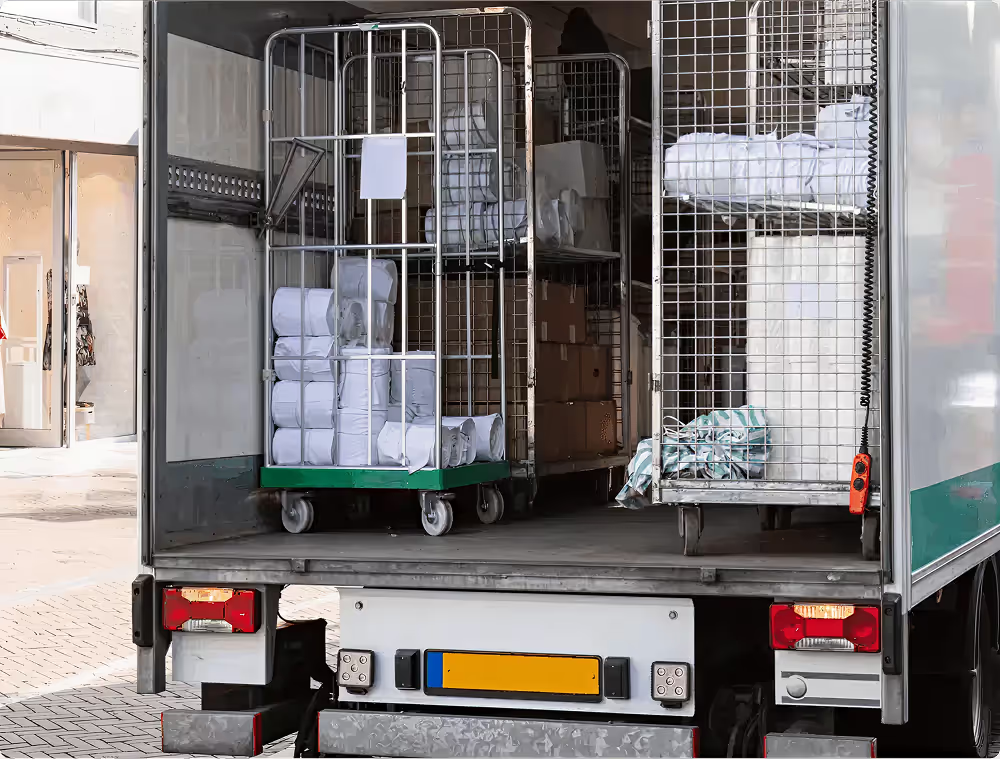
Rolling carts and roll cages play a key role in internal logistics and last-mile distribution. These mobile units—typically constructed with durable frames and wheels—are ideal for transporting goods from distribution centers to retail locations or for maneuvering inventory within a warehouse or store. Their wheeled design eliminates the need for heavy equipment like forklifts at the point of delivery, increasing operational efficiency and reducing labor requirements. Many are also collapsible, allowing for efficient storage and backhauls. They are especially prevalent in retail, parcel delivery, and healthcare logistics, where mobility and speed are critical.

Types of Reusable Transport Packaging

Returnable Racks

Returnable racks are engineered to transport large, bulky, or fragile goods that require structured support. Constructed from heavy-duty materials such as steel, these racks often include compartments or fixtures to secure items during transit. They are commonly used in automotive manufacturing, electronics, and industrial parts distribution. Many racks are designed to fold or collapse when not in use, which helps reduce their footprint and improve return logistics. Because they can be custom-built for specific products, returnable racks also contribute to optimized truck loading and reduced damage during shipment.

Types of Reusable Transport Packaging

Returnable Plastic Totes (RPTs)

Returnable plastic totes are lightweight yet durable containers widely used in retail, food service, manufacturing, and distribution. These totes are designed for high-frequency reuse, offering a long lifecycle while supporting sustainability goals. They are often stackable, making them ideal for maximizing storage space. Many RPTs also feature ergonomic handles, secure lids, or other custom elements to streamline handling and protect contents. Their durability helps reduce reliance on single-use packaging, and their consistent form factor makes them easy to incorporate into automated systems.

Types of Reusable Transport Packaging

Reusable Shipping and Delivery Packaging

Reusable shipping and delivery packaging includes modular solutions like foldable crates, reusable padded mailers, and plastic or metal pallets. These packaging types are built to withstand repeated trips across first-mile, middle-mile, or last-mile supply chains. They are increasingly used in direct-to-store delivery, e-commerce, pharmaceuticals, and grocery retail. Designed for both durability and space efficiency, many of these packaging systems can be collapsed or nested for return trips. When integrated with tracking technologies, they also enable visibility into transit conditions, chain-of-custody, and asset availability.

Sustainability & Environmental Impact

As businesses and consumers alike demand more sustainable supply chains, reusable transport packaging (RTP) has become a critical tool in reducing environmental impact. By replacing single-use packaging with durable, multi-use alternatives, companies can significantly reduce waste, conserve resources, and contribute to circular economy goals.

Environmental benefits

One of the most immediate benefits of reusable transport packaging is waste reduction. Unlike disposable packaging that often ends up in landfills after a single use, RTP systems are designed for long-term use and multiple rotation cycles. This not only reduces the volume of packaging waste generated but also lowers the frequency and cost of waste disposal.

In addition to waste reduction, RTP helps organizations shrink their carbon footprint. The production and transportation of packaging materials require significant energy. Because RTP systems are used repeatedly, they require fewer resources over time compared to manufacturing new single-use packaging for every shipment. This long-term efficiency leads to reduced emissions and more sustainable logistics operations.

Reusable packaging also promotes better resource efficiency. Materials like durable plastics and metals used in RTP systems support longevity, reducing the need to continually source and manufacture new packaging. Furthermore, many RTP solutions are recyclable at the end of their lifecycle, extending their sustainability benefits even further.

Circular economy principles

RTP plays a central role in supporting the principles of a circular economy, which emphasizes minimizing waste and maximizing the use of resources.

First, RTP systems are inherently reusable, extending the life of packaging well beyond that of single-use materials. In closed-loop systems, packaging is not discarded but instead returned, cleaned, and reused—keeping resources in circulation for as long as possible.

Second, many RTP materials are recyclable or can be repurposed into new packaging once they reach end-of-life. This further aligns with circular economy goals by reducing reliance on virgin materials and ensuring packaging contributes to a sustainable material lifecycle.
Third, RTP supports the principle of resource efficiency. Fewer resources are required over time when compared to the constant replacement of disposable packaging. This reduced consumption benefits both the environment and the bottom line.

Finally, by reducing waste and optimizing transportation through stackable and collapsible containers, RTP systems can lower greenhouse gas emissions associated with shipping and logistics.

Industry standards and certifications

Companies utilizing RTP systems can demonstrate their commitment to environmental sustainability by meeting various industry standards and certifications. Businesses can demonstrate their environmentally responsible position by adhering to these standards and obtaining certifications.

  • ISO 14001 - This widely recognized standard provides a framework for environmental management systems and is frequently used to guide organizations in minimizing their ecological impact. Reusable packaging programs contribute directly to compliance by reducing waste and improving material usage efficiency.
  • Cradle to Cradle (C2C) - The C2C program evaluates products for their environmental and human health performance, recyclability, and use of renewable energy. RTP systems designed with end-of-life recyclability and material health in mind can help companies achieve this certification.
  • Global Recycle Standard (GRS) - GRS certifies products containing recycled materials, ensuring supply chain transparency and sustainable sourcing. The EU Ecolabel offers further recognition for packaging products with lower environmental impact across their lifecycle.
  • EU Ecolabel - This certification is given to products that demonstrate a reduced environmental impact throughout their life cycle. RTP products can qualify for the EU Ecolabel by meeting recyclability and resource efficiency criteria.
  • Recycled content certification - Companies obtaining recycled content certification demonstrate that their RTP systems are manufactured using a significant percentage of reclaimed materials. These credentials not only support sustainability goals but can also provide competitive differentiation in environmentally conscious markets.

Long-term environmental impact

While RTP offers substantial long-term environmental advantages, organizations must still weigh these benefits against economic realities. Transitioning from single-use to reusable packaging involves upfront investment in durable materials, tracking infrastructure, and process changes. These costs can make RTP adoption appear challenging, particularly for organizations with complex or distributed supply chains.

However, research from McKinsey suggests that when RTP systems are rotated effectively—often at least 20 times—they begin to outperform single-use alternatives from both an economic and environmental perspective. The key lies in optimizing reverse logistics and ensuring high asset utilization. Transportation, for example, accounts for 70 to 80 percent of reuse costs per rotation. The more efficiently companies can move, return, and reuse RTP assets, the faster they achieve sustainability and financial returns.
Organizations must also consider the broader societal impact of reusable packaging. The shift affects a range of stakeholders, including packaging manufacturers, supply chain operators, and consumers. Effective change management, stakeholder communication, and alignment around sustainability goals are essential to achieving long-term success

Implementing a Reusable Transport Packaging Management System

Transitioning from single-use to reusable packaging isn’t just a switch in materials—it’s a shift in operational strategy. A successful RTP program requires careful planning, collaboration, and the right technology to manage inventory, track assets, and close the loop efficiently.

Below is a practical roadmap for how companies can implement an RTP system that delivers on both sustainability and business goals.

1

Assess packaging requirements

The first step is to evaluate your current packaging processes and identify where reusable solutions can deliver value. This assessment should include a cost-benefit analysis of existing single-use packaging, factoring in waste disposal costs, replacement rates, handling inefficiencies, and lack of visibility.

Next, businesses should identify which RTP formats best align with their specific product types, transportation routes, and supply chain needs. For example, returnable plastic totes may be ideal for high-volume distribution, while rolling carts could streamline in-store delivery. Matching packaging solutions to use cases ensures better performance and longer lifecycles.

Companies should also consider how packaging changes will impact other systems, including warehousing, racking, and automation. Selecting RTP assets that integrate smoothly with current infrastructure will reduce transition friction.

2

Set Clear Operational and Sustainability Goals

Before implementation, decision-makers should define the specific outcomes they want the RTP program to achieve. These goals may include reducing packaging waste by a certain percentage, cutting replacement costs, improving inventory visibility, or achieving sustainability certifications.

Establishing clear benchmarks from the outset allows teams to measure success and refine their approach over time. These goals should also guide vendor selection, packaging design, and the choice of tracking technologies.

3

Design the Return and Reuse Workflow

An RTP program is only as strong as the system that supports it. Organizations must create a reliable return process to ensure reusable packaging is recovered, cleaned (if applicable), and redeployed quickly. This involves establishing return frequency, collection points, and handling procedures.

Industries like food and pharmaceuticals may require sanitation steps, while others may prioritize foldable or stackable designs for return efficiency. Defining these parameters early helps prevent disruptions and keeps packaging assets in circulation.

Training employees and partners on proper usage, return protocols, and tracking expectations is also essential. Clear communication across supply chain partners ensures accountability and program consistency.

4

Deploy Tracking and Monitoring Technology

Visibility is critical to realizing the full benefits of reusable packaging. Without it, assets are easily lost, underutilized, or delayed—undermining both cost savings and sustainability goals.

Businesses should deploy a tracking system that aligns with their operational scale and complexity. Traditional options like barcodes and RFID offer varying levels of visibility but often require manual scans or expensive infrastructure. More advanced options, such as Ambient IoT, provide continuous, automated tracking without the need for physical interaction.

Wiliot’s IoT Pixels, for example, are self-powered tags that collect and transmit data on the location, temperature, and humidity of packaging assets. This allows for real-time insight into inventory flow, reducing shrinkage, identifying bottlenecks, and improving decision-making across the supply chain.

5

Pilot the Program and Scale Strategically

Rather than attempting a full rollout immediately, companies should begin with a focused pilot program. This might involve tracking RTPs for a specific product line, route, or facility. The goal is to test assumptions, uncover operational challenges, and refine logistics before expanding.

Pilots also help build internal support and provide measurable proof points for broader investment. Once the pilot demonstrates reliable ROI and operational fit, the program can be scaled with confidence.

6

Monitor Performance and Iterate

Ongoing success depends on continuous monitoring and improvement. Businesses should track key metrics such as asset utilization, turnaround time, shrinkage rates, and cost savings. This data can inform adjustments in packaging design, route planning, reverse logistics, or technology deployment.

It’s also important to collect feedback from stakeholders across the organization and supply chain. Their insights can uncover pain points that data alone may miss, helping to refine the system over time.

By treating RTP implementation as an evolving strategy—not a one-time switch—companies can unlock increasing value from their reusable packaging investments while driving long-term sustainability impact.

A real-world success story

Royal Mail provides an example of a company benefiting from reusable transport packaging and returnable asset tracking. The company is leveraging the advanced Ambient IoT technology of the Wiliot Intelligence Platform to unlock new efficiencies and achieve significant savings. Royal Mail has tagged 850,000 wheeled reusable containers with Wiliot’s IoT Pixels, allowing them to receive continuous data regarding their location and temperature as they move through the supply chain. The data furnishes unprecedented insight into parcel movement enabling benefits such as:

  • Asset location - By gaining visibility into its vast fleet of rolling cages, Royal Mail optimized asset distribution across ~5,000 locations and enterprise customers, reducing the problem of missing cages, avoiding $M's in asset purchases.
  • Vehicle utilization - As rolling cages are loaded into trucks, Royal Mail tracks which vehicles have underutilized capacity and optimizes performance. This translates into fewer trips with unused truck space.
  • Network flow optimization - By tracking rolling cages as they travel in trucks, Royal Mail can visualize more effective routes with departures better synchronized with workload, so mail gets to its destination with predictability and efficiency.
  • Enhanced service quality - End-to-end visibility allows Royal Mail to increase customer trust by delivering items faster and more reliably while also giving customers unprecedented visibility into their deliveries.
  • Carbon emission reduction - Greater utilization of vehicles plus route optimization means Royal Mail can optimize labor, use less fuel and the new capability of reducing its carbon emissions.

Challenges & Solutions

Upfront costs

  • Investing in durable, reusable packaging assets can appear cost-prohibitive, especially compared to the low unit cost of single-use packaging. When adding the cost of tracking infrastructure and workflow redesign, some organizations hesitate to proceed.
  • The key to overcoming cost concerns is to evaluate RTP not as a one-time expense, but as a system-level investment. Over time, reusable containers pay for themselves through reduced replacement rates, lower waste disposal costs, and operational efficiencies. When paired with visibility solutions like Wiliot’s Ambient IoT, companies also unlock additional value by eliminating shrink, optimizing asset utilization, and improving delivery accuracy. Conducting a full lifecycle cost analysis—including asset reuse frequency and labor savings—often reveals a strong ROI within months, not years.

Workflow integration

  • Shifting to RTP may require changes to warehouse layouts, transportation routes, inventory systems, and employee workflows. Without a thoughtful integration plan, the transition can cause confusion or inefficiency.
  • To ease the transition, companies should document and map out how RTP assets will flow through their operations. This includes considering compatibility with racking systems, automation equipment, and return processes. Piloting the program on a small scale helps identify bottlenecks and allows the organization to adapt gradually. Integration becomes smoother when supported by real-time tracking data that can inform routing, restocking, and return schedules based on actual asset locations.

Reverse logistics

  • Unlike single-use packaging, reusable assets must be returned, cleaned (if necessary), and redistributed. Without a reliable return system in place, RTP assets can become stranded or delayed—compromising the program’s efficiency and economics.
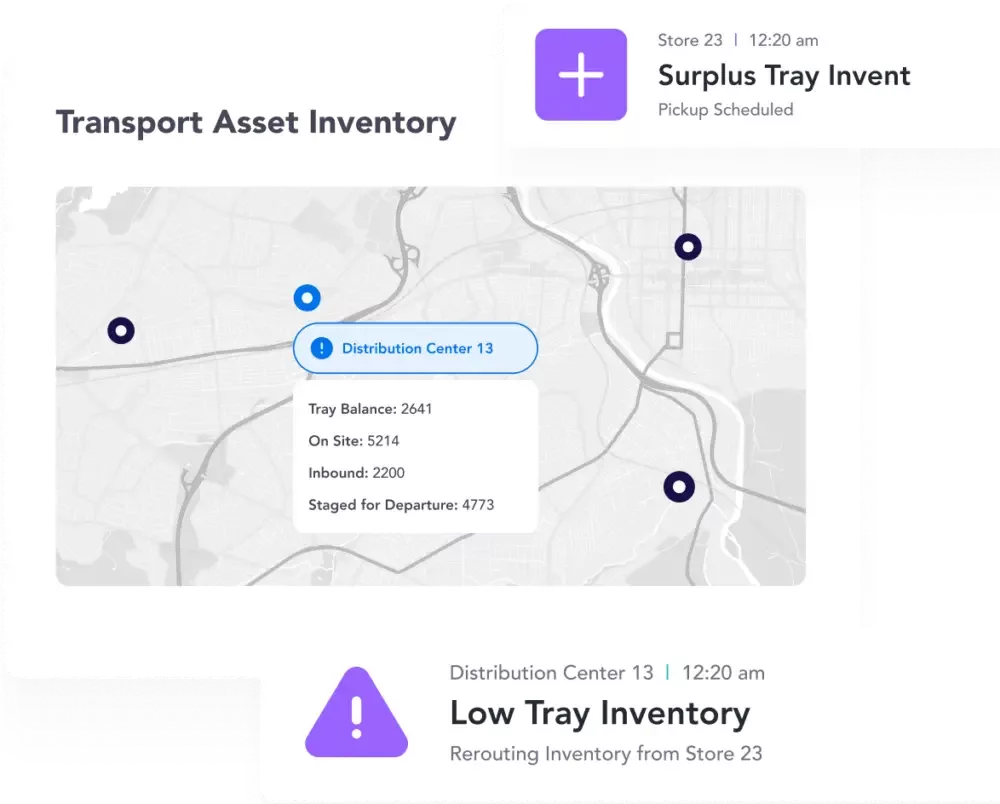
  • A successful RTP program depends on a well-orchestrated reverse logistics system. This includes clearly defined return points, regular collection schedules, and visibility into container locations. Wiliot’s IoT Pixels enable companies to track each asset’s location across the supply chain without relying on manual scans. For example, when a roll cage is delivered to a store, drivers can use real-time data to ensure they retrieve empty cages during the same trip—closing the loop efficiently and reducing backhaul waste.

Asset shrink

  • Loss, theft, and misplacement of RTP assets remain a major source of cost and inefficiency, especially in high-volume or decentralized operations. Without visibility, companies often over-order containers to compensate for what they can’t locate or recover.
  • Visibility is the foundation of effective asset control. Ambient IoT offers a scalable, low-cost method to track RTP items throughout the supply chain in real time. With Wiliot’s IoT Pixels, companies can identify not just where an asset is currently located, but where it was last seen—making it easier to detect and resolve shrinkage hotspots. This data helps organizations improve return rates, reduce unnecessary asset purchases, and build accountability into their logistics workflows.

Future-proofing your operations

Reusable packaging is not only a sustainability imperative—it’s also a platform for continuous improvement. As logistics networks become more connected and responsive, the ability to gather data from packaging itself will become a strategic advantage.

Future-proofing your operations

Technologies like Ambient IoT are at the forefront of this shift. They enable packaging to act as a sensor, a location beacon, and a data source. This unlocks powerful capabilities, including:

  • Real-time alerts for mis-shipments and loading errors
  • Dynamic inventory visibility across the supply chain
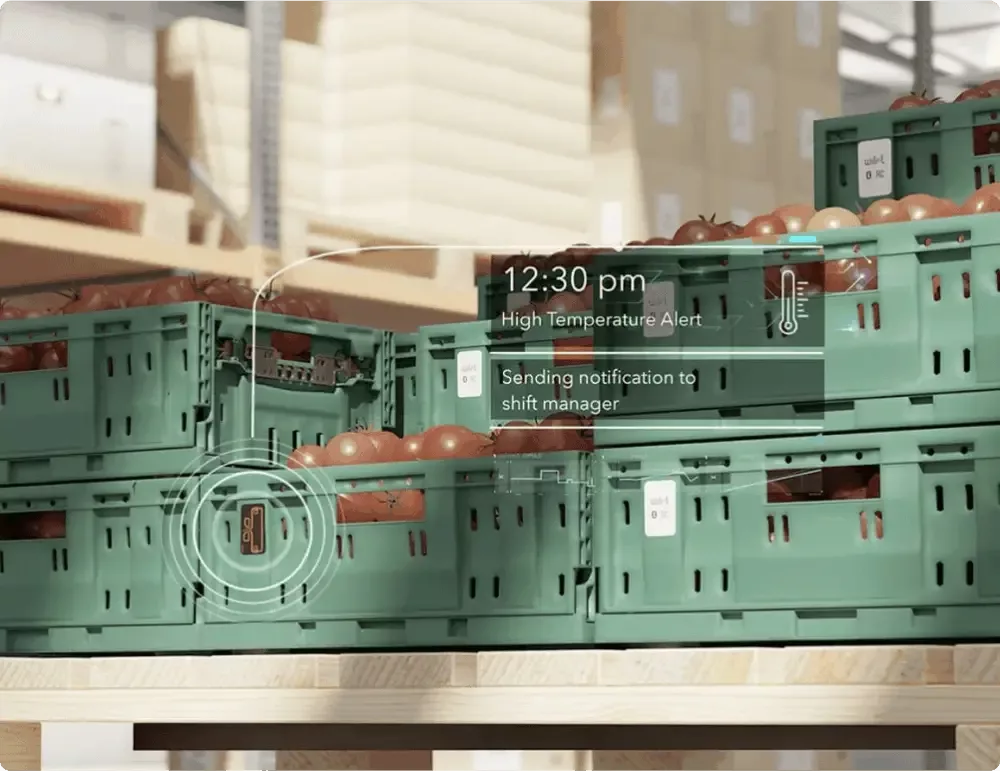
  • Temperature and humidity monitoring for perishable goods
  • Predictive insights into usage cycles and container availability

By adopting solutions built for scale—like Wiliot’s battery-free IoT Pixels—companies can manage RTP programs with a level of precision and automation previously only available in high-cost, high-margin sectors.

Future Trends in Reusable Transport Packaging

As sustainability imperatives rise and technology advances, reusable transport packaging is poised to become even more central to efficient and responsible supply chains. Companies exploring or scaling RTP systems today are not just solving immediate challenges—they're future-proofing operations for a world where packaging becomes an active contributor to visibility, efficiency, and brand trust.


Here are the key trends shaping the next generation of RTP.

Future Trends in Reusable Transport Packaging

Innovations in packaging design

Manufacturers are rethinking packaging design to meet new operational, environmental, and technological demands. Expect to see continued growth in modular packaging systems that improve space efficiency during storage and transport. These designs allow for easier stacking, folding, and nesting—reducing return-trip costs and improving vehicle utilization.

Material science is also playing a role. Lighter-weight composites, high-density polyethylene (HDPE), and recycled plastics are being used to create containers that are durable yet more efficient to move. Many of these materials also improve recyclability at end-of-life, aligning with sustainability goals.

Another critical development is the integration of smart design features. New RTP formats are being engineered to embed tracking technologies, sensors, or data carriers directly into the packaging. This shift transforms containers into smart, traceable assets that reduce reliance on external tags or manual scanning.

Finally, more manufacturers are building packaging to meet circular design principles and comply with sustainability standards such as ISO 14001, Cradle to Cradle (C2C), and the Global Recycle Standard (GRS). This creates stronger alignment between product development, supply chain operations, and ESG performance.

Future Trends in Reusable Transport Packaging

Digital transformation in asset tracking

One of the most impactful trends shaping RTP is the shift toward continuous, automated asset visibility. As logistics networks become more complex, the need for real-time data on asset location, condition, and utilization is driving widespread adoption of connected tracking technologies.

Ambient IoT, in particular, is emerging as a scalable, low-maintenance alternative to RFID and traditional IoT. By using energy harvested from ambient radio waves, solutions like Wiliot’s IoT Pixels can monitor RTP items without batteries, scans, or expensive infrastructure. This enables always-on asset tracking at a fraction of the cost of earlier technologies.

In addition to location data, advanced tracking systems are capturing environmental conditions such as temperature and humidity—essential for industries like grocery, pharma, and healthcare. With this level of visibility, companies can monitor product quality, reduce spoilage, and meet regulatory requirements more efficiently.

Blockchain is also being explored for its ability to ensure the integrity and traceability of returnable assets throughout the supply chain. When combined with sensors and smart packaging, it creates a decentralized, tamper-proof record of each asset’s journey—adding a new layer of accountability and transparency.

Artificial intelligence and machine learning are being layered on top of tracking data to uncover deeper operational insights. Predictive models can forecast packaging demand, identify inefficiencies, and even automate restocking and retrieval workflows based on usage patterns.

Future Trends in Reusable Transport Packaging

Sustainability trends

While sustainability is often discussed as a regulatory or ethical concern, it is increasingly a source of business value and brand differentiation. Consumers and corporate buyers alike are pushing for more sustainable packaging—and RTP answers that call with proven environmental and economic benefits.

Governments around the world are tightening restrictions on single-use plastics and packaging waste. In the EU and elsewhere, this has led to outright bans, incentivizing companies to explore RTP as a proactive compliance strategy. Reusable packaging not only aligns with these regulations but often exceeds their requirements by supporting circular systems.

In parallel, manufacturers are adopting recycled and bio-based materials, such as plant-based polymers and bamboo composites, to enhance the sustainability profile of RTP products. As material technology matures, these alternative inputs are becoming more cost-competitive with virgin plastics and metals.

Another trend gaining traction is data-driven sustainability. Companies are leveraging tracking technologies like Ambient IoT to quantify the carbon savings, waste reductions, and lifecycle improvements generated by their RTP programs. These insights help validate ESG claims and can be shared with stakeholders to demonstrate impact.

Consumer expectations are also shifting. Retailers, e-commerce brands, and food companies are responding to demand for more sustainable delivery packaging. This has led to innovations like reusable mailers, returnable click-and-collect crates, and refillable containers for CPG products. Businesses that embrace these solutions are not only reducing waste—they are enhancing customer loyalty and brand equity.

Frequently Asked Questions (FAQs)

Arrow

What is reusable transport packaging, and why is it important?

Reusable transport packaging (RTP) refers to containers, racks, pallets, and other durable packaging formats designed to be used multiple times across the supply chain. Unlike single-use packaging, RTP systems help reduce waste, lower long-term costs, and support sustainability goals. By enabling circular logistics, RTP not only minimizes environmental impact but also enhances supply chain performance and asset visibility.

Arrow

What are the benefits of implementing returnable asset tracking?

Asset tracking allows companies to protect their investment in reusable packaging by preventing loss, improving utilization, and streamlining operations. By knowing where every tote, cart, or rack is—and where it’s been—organizations can reduce replacement costs, minimize shrinkage, improve inventory planning, and support just-in-time operations. Advanced solutions like Ambient IoT also provide continuous, scan-free visibility without manual effort.

Arrow

How can businesses transition to sustainable, reusable packaging?

A successful transition begins with evaluating current packaging practices and identifying where RTP offers operational or environmental value. From there, companies should set clear goals, select the appropriate packaging formats, and design a return and reuse system that includes logistics planning and stakeholder training. Tracking technologies and pilot programs help ensure the system is working as intended before scaling up.

Arrow

What challenges might arise with returnable container management?

Common challenges include upfront costs, reverse logistics, workflow integration, and asset shrink. These can be addressed by building a clear ROI case, implementing structured return systems, mapping operational flows, and leveraging real-time tracking to maintain visibility and control. Technology plays a central role in reducing both complexity and cost.

Arrow

How can businesses track their reusable transport items?

Ambient IoT is quickly becoming the preferred approach for scalable, low-cost RTP tracking. Solutions like Wiliot’s IoT Pixels use energy harvested from radio waves to provide continuous updates on location, temperature, and asset status—without batteries, scans, or infrastructure-heavy systems. This unlocks end-to-end visibility across even the largest supply chains.

Conclusion and Next Steps

Reusable transport packaging is no longer a niche solution—it’s a strategic asset. Companies that make the switch not only reduce waste and improve sustainability but also unlock significant financial and operational benefits.

With the right tracking system in place, RTP becomes more than just packaging—it becomes an intelligent component of your supply chain, helping you improve accuracy, reduce shrink, and respond faster to change. Technologies like Ambient IoT are turning containers into connected devices that tell you exactly what’s happening, where, and when.

As regulations tighten and customers demand more responsible operations, investing in reusable, trackable packaging is not just a smart move—it’s an essential one.

Additional Resources and Further Reading

Wiliot Deployment with Royal Mail

Watch the video

External Thought Leaders

Further reading and information are available from the following external sources.

The Reusable Packaging Association

reusables.org

Ambient IoT Alliance

ambient-iot.org

CTA

Let’s Talk.

Reach out to see how Wiliot’s Ambient IoT can help you launch|
or scale a reusable transport packaging program—smarter, faster, and more sustainably.