IoT Pixels

Battery-free Bluetooth sensors that bring every item in your supply chain online — continuously, at scale

What Are Wiliot IoT Pixels?

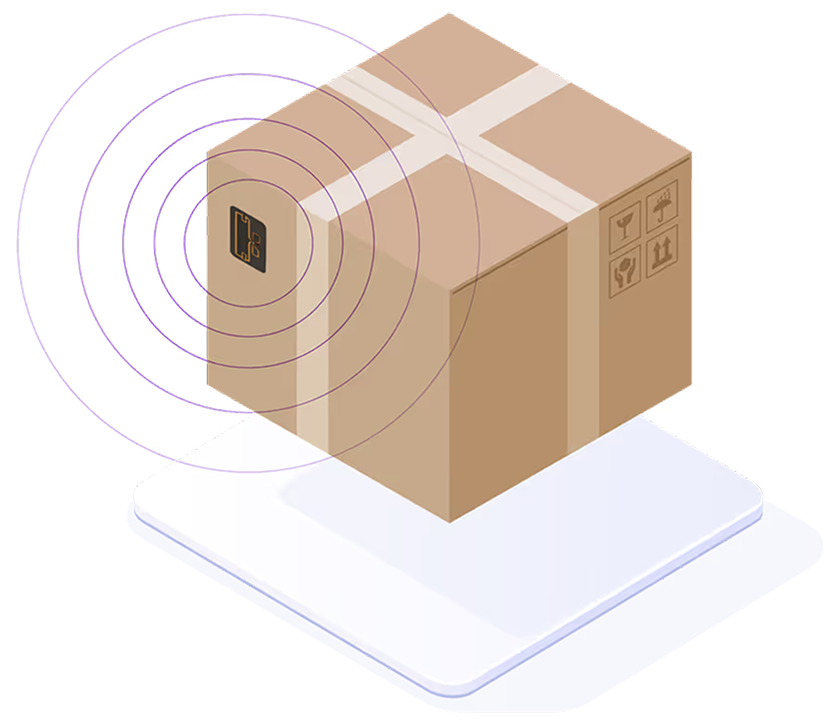
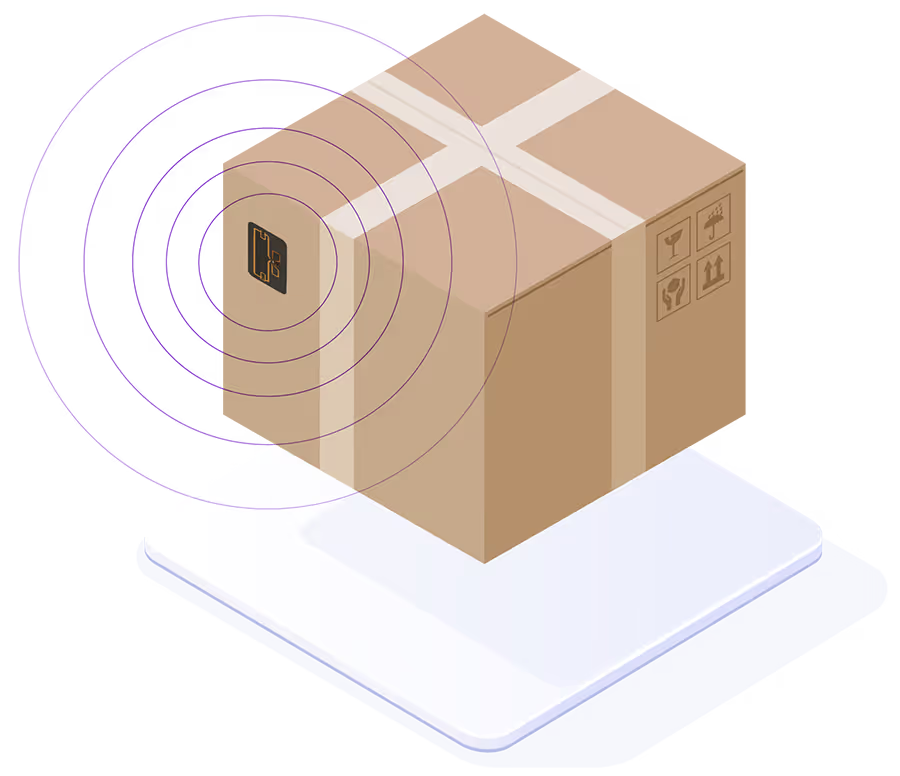
Wiliot IoT Pixels are the sensing layer of the Wiliot Physical AI platform. These low-cost, battery-free Bluetooth sensors attach to cases, pallets, reusable transport items (RTIs), and individual products — harvesting energy from ambient radio signals to sense and transmit location, temperature, and movement data continuously. No batteries. No charging. No maintenance. No scanning required.

When combined with the Wiliot Network Infrastructure and Wiliot Physical AI platform, IoT Pixels enable every tagged item to become a continuous, real-time data source — feeding the purpose-built AI and ML models that transform raw sensing data into actionable supply chain intelligence. Automated inventory tracking, condition monitoring, FSMA 204 traceability, and digital product passports are all built on the foundation that IoT Pixels provide.

What Makes IoT Pixels Different

Most supply chain tracking technologies depend on active scanning — a human or machine must read a barcode or pass an item through a portal to generate a data point. IoT Pixels change that fundamental model. Because they harvest ambient radio frequency energy and transmit via standard Bluetooth, they generate data continuously — whether or not anyone is present to scan them.

This is the difference between a snapshot and a stream, between periodic visibility and continuous intelligence.

Battery-free operation

IoT Pixels harvest radio frequency energy from the environment — requiring no batteries, no charging infrastructure, and no maintenance over the life of the tag. No power limits to operational lifespan.

Dual-band harvesting

Gen 3 IoT Pixels feature two harvesting antennas: a Sub-1 GHz antenna for long-range energizing up to 40 meters, and a 2.4 GHz antenna for close-range energizing up to 3 meters — maximizing operational flexibility across deployment environments.

Extended broadcast range

Gen 3 IoT Pixels broadcast up to 40 meters via Bluetooth Low Energy 5.2 — a significant increase over prior generations, enabling wider area coverage with fewer infrastructure devices.

Expanded sensing

Gen 3 IoT Pixels support temperature, humidity, light, and location sensing — enabling a broader range of condition monitoring and compliance use cases from a single tag.

Standard Bluetooth

Compliant with Bluetooth Low Energy 5.2. Any Bluetooth 4.0+ device configured to listen for Wiliot beacons can relay data to the Wiliot Physical AI platform — no proprietary readers required.

Embedded security

AES-128 encryption and authentication on every transmission — data can only be interpreted in the Wiliot Physical AI platform, ensuring privacy and authenticity end-to-end.

Cold chain ready

Operates from -40°C to 85°C with no moving parts or power components to fail — fully suited for freezer, cold chain, and harsh logistics environments.

IoT Pixels Specifications

Gen 3 IoT Pixels are Wiliot's latest generation dual-band pixel, featuring improved performance and longer range at a lower cost than previous generations.

General
Parameter
Detail
Application Surface
Cardboard
Size
3.3 × 6.0 cm
Delivery Format
Reels — 76.2 mm (3-inch) inner diameter cardboard core
Antenna Material
Aluminum
Operable Temperature Range
-40°C to 85°C
Common Use Cases
Asset tracking, inventory intelligence, temperature compliance, cold chain monitoring
Sensing Families
Temperature, humidity, light, location
Harvesting & Energizing
Harvesting Bands
Detail
Sub-1 GHz Energizing Range
902–928 MHz (Sub-1 GHz) and 2402–2483.5 MHz (2.4 GHz)
2.4 GHz Energizing Range
Up to 40 meters (bridge to pixel) — optimal conditions
Harvesting Polarization
Up to 3 meters (bridge to pixel) — optimal conditions
Antenna Material
Linear, parallel to wide edge
Broadcast
Parameter
Detail
Broadcast Protocol
Bluetooth® Low Energy (LE) 5.2 — non-connectable, unidirectional advertising PDU
Broadcast Range
Up to 40 meters
Broadcast Signal Strength
EIRP -20 dBm @ 2.402 GHz
Bluetooth Channels & PHY
Ch37 @ 1 MHz; Channels 10 and 21 @ 2 MHz
Broadcast Polarization
Linear, parallel to wide edge
Broadcast Frequency
1–90+ seconds depending on energy harvesting conditions
Calibration
3 BLE advertisements (CH 37, 38, 39) every 90 ms (default)
Broadcast Payload
Wiliot Ephemeral ID (WEID) — encrypted data interpretable only in the Wiliot Physical AI platform
Temperature Accuracy
Temperature Range
Accuracy
-40°C to -20°C
± 1.5°C
-20°C to 60°C
± 1.0°C
60°C to 85°C
± 1.5°C
Repeatability
± 0.08°C (1σ) — raw values can be further optimized by Wiliot platform data models
Sensing Rate

The sensing rate measures the average time between sensing packets for IoT Pixels operating within an energizable Sub-1 GHz field. Rate is distance-dependent — IoT Pixels broadcast only after a fixed harvested energy threshold is met.

Distance from Bridge
Average Sensing Rate (optimal conditions)
5 meters
~2 seconds
10 meters
~4 seconds
20 meters
~16 seconds
Security
Parameter
Detail
Encryption
AES-128 encryption and authentication on every transmission
Data Interpretation
Broadcast payload (WEID) is encrypted and can only be decrypted and interpreted within the Wiliot Physical AI platform
Serialization
Unique ID embedded in each data packet; additional serialization supported via API
Radio Certifications
Certification
ID / Region
FCC (USA)
2AXVQ-WILIOT3
CE / RED (EU)
CS37145
60°C to 85°C
26623-WILIOT3

Compatible Infrastructure

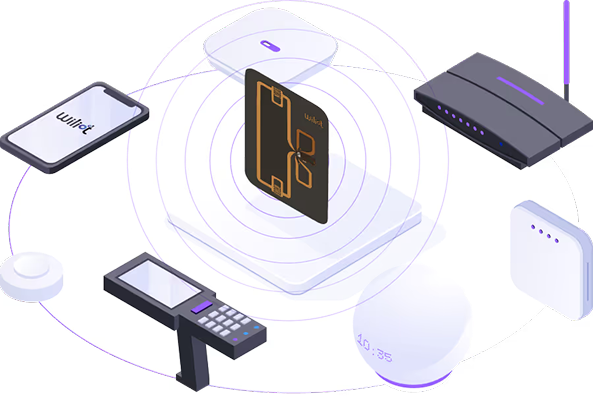
IoT Pixels work with all "Works with Wiliot" certified bridges and gateways. Refer to the Network Infrastructure page for the full list of certified partner devices.

What IoT Pixels Enable

  • Continuous inventory tracking across defined areas — backrooms, coolers, freezers, storage zones, and vehicles — without manual scanning
  • Real-time temperature and condition monitoring at the case level, not just the zone
  • Automated receiving and shipment verification with no scanning required
  • Reusable asset tracking across the full DC-to-store-to-return journey
  • Item-level digital product passports and supply chain traceability
  • FSMA 204, GDP, and HACCP compliance documentation — generated automatically

Part of the Wiliot Offering

IoT Pixels work as part of Wiliot’s integrated three-component approach. The Network Infrastructure energizes IoT Pixels and collects their data. The Wiliot Physical AI platform applies purpose-built AI and ML models to transform that data into real-time alerts, inventory intelligence, and actionable insights. IoT Pixels cannot be used independently of the Wiliot Physical AI platform — the platform is designed as an integrated system for security, functionality, and performance.

Network Infrastructure

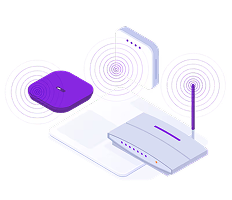
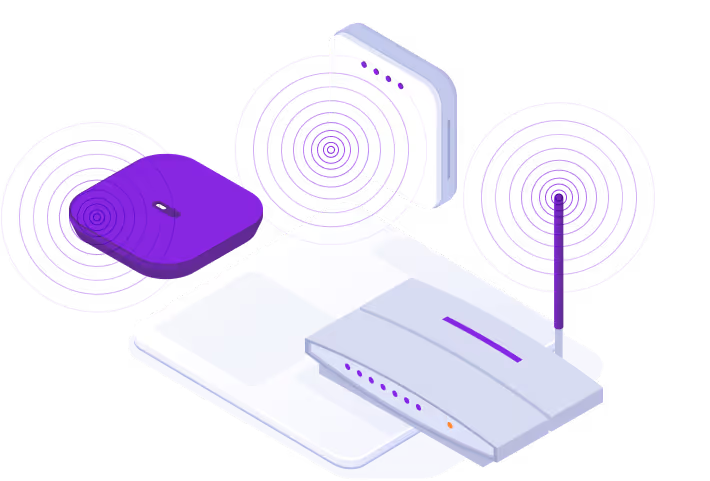
Energizes IoT Pixels and relays their data to the Wiliot Physical AI platform. Off-the-shelf bridges and gateways deployable in facilities, trailers, and across operations.

Learn More

Wiliot Physical AI Platform

Transforms continuous sensing data into real-time alerts, inventory intelligence, compliance records, and supply chain insights using purpose-built AI and ML models.

Learn More

> visibility...enabled

Step into the future of supply chain visibility

Transform

Step into the future of supply chain visibility

Wiliot Platform: IoT Pixels

Light Up Every Single Thing

What are Wiliot IoT Pixels?

Wiliot’s IoT Pixels empower every product, every object, every ‘thing’, to sense and to fix inefficiencies and problems it encounters.

When combined with machine learning and artificial intelligence in the cloud, The Wiliot Intelligence Platform delivers sensing functionalities like temperature and location. Wiliot IoT Pixels connect things to the Internet seamlessly, leveraging a ubiquitous ecosystem of Bluetooth-enabled devices like smartphones and access points. Wiliot IoT Pixels can deliver real-time, item-level data essential for digital product passports and IoT Inventory Management, enabling traceability and transparency throughout the product lifecycle.

How are Wiliot’s Battery-Free IoT Pixels different?

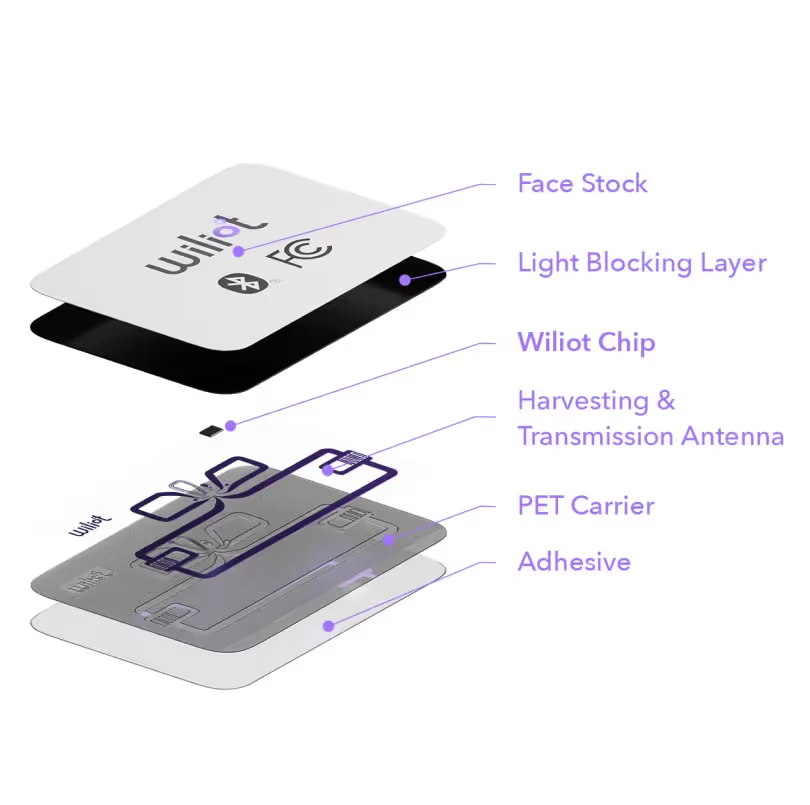
IoT Pixels are postage stamp-sized compute devices that power themselves without batteries and by harvesting radio waves.

The IoT Pixel has essentially no limits to life, is embeddable, and operates with minimal low-cost infrastructure for harvesting and reading. Being battery-free combined with innovative tag production techniques gives the IoT Pixels advantages in size, cost and maintenance.

Wiliot IoT Pixels

Features and Specs

Format

Stickers, delivered in reels

Range

10 meters

Security

128-bit AES encryption, Hardware True Random Generator. Privacy, Data Confidentiality, and Authentication Protection

Bluetooth

Compliant to latest Core 5.x specification

CPU

ARM Cortex M0+ 32-bit operating at 1 MHz

Non-Volatile Memory

Multiple harvesting units and nano-Watt computing operations

Wiliot IoT Pixels

Product Details

Battery-Free

Battery-Free: Humidity

Power

Harvests radio waves from nearby device – No power limits to lifespan

Harvests radio waves from nearby device – No power limits to lifespan

Cost

As low as 10c at high volume

As low as 12c at high volume

Size

2.8 x 4.4 cm – 0.2mm thick

2.8 x 4.4 cm – 0.2mm thick

Environmental Operating Conditions

Operates from -40 to 85 °C

Operates from -40 to 85 °C

Sensing

Temperature, Location

Temperature, Location, Humidity

Radio Frequency Certifications

FCC, IC, CE, ARIB, RCM

FCC, IC, CE, ARIB, RCM

WILIOT INTELLIGENCE PLATFORM

Learn about other components of the Wiliot Intelligence Platform

Network Infrastructure

Off-the-shelf bridges and gateways (hubs), which are quick to deploy, wake up nearby IoT Pixels using radio signals, receive their data, and forward it securely to the Wiliot Cloud.

Wiliot Cloud

The Wiliot Cloud is where raw sensing data is transformed into smart decisions and where our agents and specialized AI models live — providing alerts, analytics, and dashboards, along with flexible integration capabilities.

USE CASES

Explore Wiliot Applications

Frequently asked questions

What are Wiliot IoT Pixels?

How do IoT Pixels work without batteries?

What data do IoT Pixels capture and transmit?

What is the range and performance of IoT Pixels?

How do IoT Pixels enable Physical AI and Supply Chain AI?

How are IoT Pixels different from RFID or barcode labels?