Temperature Monitoring

Case-level cold chain visibility — preventing excursions, waste, and compliance failures from source to shelf

The Challenge

Temperature-sensitive products travel through complex, multi-handoff supply chains — from manufacturer to distributor to DC to store — with every transition creating an opportunity for excursions to occur. Most cold chain monitoring today operates at the zone level, tracking the temperature of a trailer or room rather than the product itself. Zone-level monitoring misses product-level excursions entirely. By the time spoilage is discovered, damage has already occurred — and the result is waste, forced markdowns, compliance violations, and brand damage.

The scale of the problem is significant. Up to $260 billion in perishable food is lost globally each year due to temperature excursions and cold-chain failures. Retailers experience approximately 7% shrink in perishables, much of it preventable. Regulatory frameworks including FSMA 204, GDP, and HACCP are tightening compliance requirements, raising the stakes for inadequate documentation.

Download Solution Brief

The Wiliot Solution

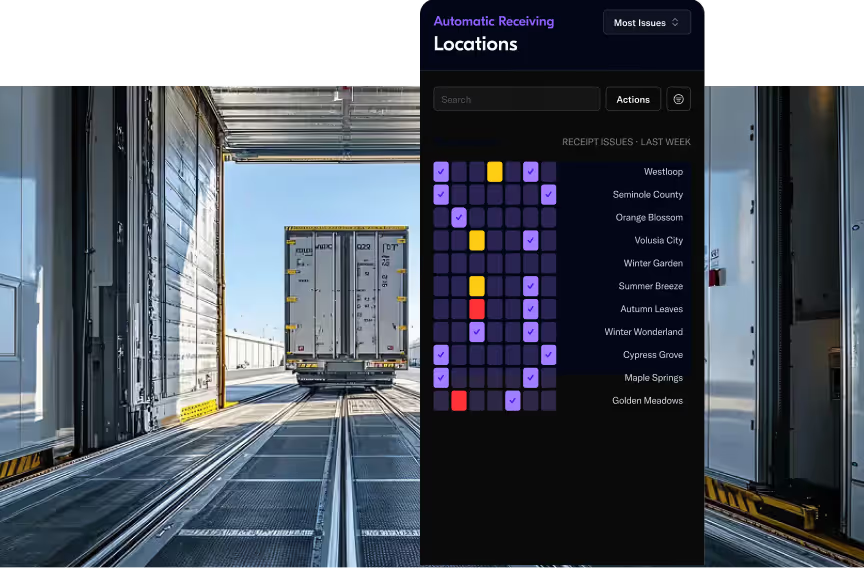
Wiliot's Temperature Monitoring solution delivers continuous, case-level temperature and dwell-time visibility across every handoff in the cold chain — using battery-free IoT Pixels and minimal infrastructure. Unlike zone-level systems, Wiliot monitors the product itself. Real-time alerts identify at-risk products before damage occurs, automated records provide complete compliance documentation, and because monitoring is continuous from source to shelf, excursions are caught early — when intervention is still possible.

The solution automatically:

  • Tracks case-level temperature continuously throughout the cold chain
  • Detects temperature excursions in real time and sends immediate, product-specific alerts
  • Documents complete temperature history per SKU and lot for compliance audits
  • Identifies specific at-risk products — not just entire zones or shipments
  • Tracks dwell time to flag products approaching shelf-life or safety thresholds

Key Outcomes

90%
Reduction in temperature-related spoilage
<1 Year
Average ROI timeline
99%
Outbound load
accuracy
5–10×
lower infrastructure
costs vs. RFID

How it Works

Battery-free IoT Pixels are applied to cases at source — by suppliers or manufacturers — and travel with the product through every stage of the cold chain. Fixed infrastructure at DCs, stores, trailers, and cold storage facilities captures continuous temperature and location signals. The Wiliot Physical AI platform processes this data, generating real-time alerts when excursions are detected and building a complete timestamped temperature history per SKU or lot. Compliance documentation is generated automatically and pushed into your existing systems via cloud-to-cloud integration. No manual logging required.

Key differentiator: Wiliot monitors at the case level — not the zone level. Zone-level monitoring can show a compliant reading for a room or trailer while individual products experience excursions during loading, transit, or staging. Case-level monitoring closes that gap entirely.

Quick-Service 
Restaurants (QSR)

Challenge: Delivering fresh food to thousands of locations with tight shelf-life windows and high quality expectations

Outcome: 90%+ reduction in temperature violations at the dock; fewer customer complaints about product quality

Grocery & Food Retail

Challenge: Managing perishables across multiple temperature zones from farm to shelf with minimal waste

Outcome: Double-digit reduction in waste and markdowns from early excursion detection and intervention

Food & Beverage Distribution

Challenge: FSMA 204 traceability compliance across complex, multi-tier supply chains

Outcome: Automated traceability records and compliance documentation; reduced audit risk and preparation time

Healthcare
& Pharma

Challenge: Strict GDP and FDA requirements for temperature integrity across vaccines, biologics, and specialty drugs

Outcome: Reliable, documented temperature integrity at the case level; zero-findings audit performance

Third-Party Cold Storage

Challenge: Storage Providing multi-client temperature guarantees and SLA documentation across shared storage environments

Outcome: Documented per-client compliance records; reduced claims and disputes from objective temperature data

Implementation

Wiliot's Temperature Monitoring solution deploys across fixed and mobile cold chain environments and is live in weeks.

Timeline

System live in weeks from deployment kickoff.

Tagging Strategy

Suppliers or manufacturers apply IoT Pixels at source, enabling full cold chain coverage from origin, or tag at the first receiving point for downstream visibility.

Infrastructure Deployment

Fixed installations at DCs, retail stores, and cold storage facilities. Mobile deployments for refrigerated trailers and delivery vehicles. Standard low-voltage installation by certified contractors.

Integration

Seamless cloud-to-cloud (C2C) data transfer into your existing ERP, WMS, or food safety platform. SDK and open APIs available for compliance reporting and custom alert workflows.

Frequently Asked Questions

What is temperature monitoring in the supply chain?

How does Wiliot’s temperature monitoring solution work?

What problems does temperature monitoring solve?

What are the benefits of real-time temperature monitoring vs. traditional methods?

Can temperature monitoring help with regulatory compliance?

What ROI can companies expect from temperature monitoring?

> visibility...enabled

Step into the future of supply chain visibility

Transform

Step into the future of supply chain visibility

Temperature Monitoring

Prevent waste, markdowns, and compliance failures from source to shelf

Cold Chain Operators are faced with ensuring that temperature-sensitive products remain within strict conditions across every handoff. Yet industry data shows the cold chain routinely breaks. Up to $260B of perishable food is lost each year globally due to temperature excursions, improper handling, and cold-chain failures. Retailers experience ~7% shrink in perishables, largely driven by preventable cold-chain issues.

Wiliot provides a continuous, case-level temperature and dwell-time visibility solution using battery-free IoT Pixels and minimal infrastructure.

The solution application automatically:

  • Tracks case temperature throughout the cold chain

  • Detects temperature excursions in real-time and sends immediate alerts

  • Documents complete temperature history for compliance audits

  • Identifies specific products at risk (not just entire zones)

$2M-$15M annual enterprise savings from reduced waste, markdowns, and compliance costs

99%+ case-level accuracy for location and temperature

Automated compliance documentation - full audit trail for regulatory requirements

Faster payback (~1 year on average), driven by reduced waste and higher product sell-throug

Examples of Industry Applications

Quick-Service Restaurants (QSR)

Challenge: Delivering fresh food to thousands of locations with tight shelf-life windows

Outcome: 90%+ reduction in temperature violations, fewer customer complaints about quality

Grocery & Food Retail

Challenge: Managing perishables from farm to shelf with multiple temperature zones

Outcome: Double-digit reduction in waste and markdowns

Food & Beverage Distribution

Challenge: FSMA 204 compliance across complex multi-tier supply chains

Outcome: Automated traceability and compliance documentation, reduced audit risk

Pharmaceutical & Healthcare

Challenge: Strict GDP/FDA requirements

Outcome: Reliable temperature integrity for vaccines, biologics

Third-Party Cold Storage

Challenge: Multi-client SLAs, providing temperature guarantees to multiple clients

Outcome: Documented compliance, reduced claims/disputes

Download the
Solution Brief

Frequently asked questions

What is temperature monitoring in the supply chain?

How does Wiliot’s temperature monitoring solution work?

What problems does temperature monitoring solve?

What are the benefits of real-time temperature monitoring vs. traditional methods?

Can temperature monitoring help with regulatory compliance?

What ROI can companies expect from temperature monitoring?