RFID creates choke points at fixed read points. Our scan-free solutions provide continuous visibility with the lowest cost infrastructure, delivering real-time supply chain intelligence while minimizing errors, reducing waste, and driving ROI across enterprises.
Optimizing Your Stock with Advanced IoT Inventory Management
July 16, 2024
Introduction to Inventory Management using IoT
IoT-enabled inventory management is the integration of Internet of Things (IoT) technology into inventory management systems to track product quantities in facilities and as they move through the supply chain. This IoT-based visibility furnishes companies with significant advantages over legacy inventory management solutions and a substantial competitive edge over market rivals.
IoT technology has the capability of revolutionizing inventory management by providing visibility into all areas of a company’s supply chain as the products move around facilities and through the supply-chain, not just at receiving and the point of sale. This data stream eliminates error-prone and expensive manual labor. Enhanced connectivity and real-time data transmission made possible with IoT technology offers businesses actionable insights that improve inventory accuracy, promote operational efficiencies, and reduce out-of-stocks.
The foundation of an IoT inventory management solution is constructed using IoT devices incorporated into reusable transport items, products and packaging in a company’s supply chain. The devices can be deployed on containers, pallets, totes, bins, cases, or items based on the required data granularity and the type of commodity being tracked. The goal is to passively obtain location information of these assets or products, to automatically update inventory management systems, rather than depend on manual processes and assumptions.
The IoT devices used to build the network come in a variety of forms.
RFID tags
Traditionally, RFID tags are affixed to inventory items and scanned at specific points in the supply chain to provide location information. This method requires scanning using either handheld readers or dedicated RFID “portals”. To achieve accurate inventory counts using handheld RFID readers, facility operators must accurately perform manual scans. In many cases, this can easily introduce human error. RFID portals or gates, on the other hand, remove the need to scan manually in exchange for much higher infrastructure and installation costs. Using either technique, RFID scanning offers only a fragmented view of inventory movement as items are only scanned at designated intervals or choke points rather than a continuous end-to-end view.
Bluetooth beacons or tags
Bluetooth beacons or more accurately tags (because they are attached to the inventory and move with it - beacons are stationary) eliminate the problem of manual scanning by instead communicating continuously with Bluetooth-enabled devices, rather than when prompted with a scanner. In the past this was only made possible by their built-in battery. While reducing labor costs this solution is hindered by the expense and form factor associated with the devices, often making it an inappropriate and expensive choice for tracking individual products, cases, and assets. Battery-powered Bluetooth devices are typically used on large or high value items such as appliances or cargo containers.
Computer vision systems
Computer vision systems consist of a network of cameras compute systems that can recognize inventory from fixed locations. In some cases the idea is to reuse security cameras but generally it requires many more cameras placed at angles with direct line of sight of all the items that are being tracked. An alternative is to have the cameras transported on robots. Challenges are avoiding obstructed line of sight. These systems have several disadvantages when deployed for inventory management. While they don’t require manual scanning or a physical element on the products themselves, their expensive compute infrastructure is a deterrent to implementation. Computer vision technology in some cases cannot uniquely identify serialized SKUs, limiting their ability to perform the granular tracking required by an effective inventory system.
Wiliot Data Visibility Platform
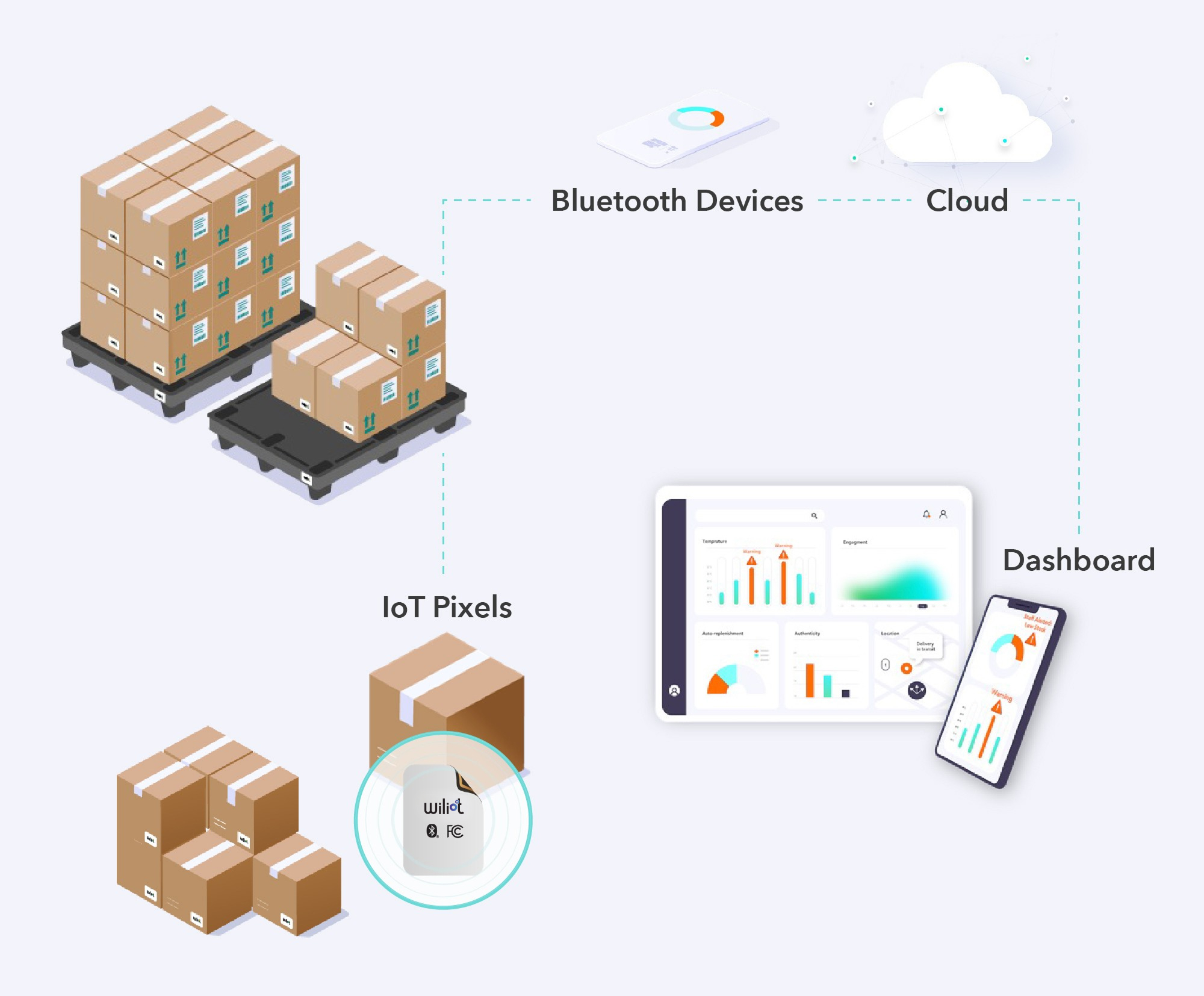
The Wiliot platform is an advanced IoT solution that offers significant benefits over traditional inventory systems.. At the heart of this visibility platform are Wiliot’s IoT Pixels. Small, postage-stamp-sized computers that speak Bluetooth and power themselves by harvesting energy from radio waves, in lieu of a battery. These “bluetooth stickers” are attached to or integrated with products, cases, and other assets, and continuously feed data to the Wiliot Visibility Platform to generate real-time (temperature and humidity) sensing insights and inventory updates.
An inventory management solution that leverages Wiliot technology both eliminates the need for manual scanning and leverages a low-cost bluetooth infrastructure. By ingesting the sensing and real-time location data made available from Wiliot IoT Pixels, the Visibility Platform enables a continuous view of inventory throughout the supply chain, unlocking real-time alerts and notifications to catch low-stocks and supply chain issues before they result in out-of-stocks.
The following diagram illustrates the process flow in an inventory management system designed around IoT technology.
IoT enabled inventory management systems offer many benefits to companies that impact their bottom line and increase their ability to meet customer expectations and promote business growth.
Increased efficiency - The data-driven insights provided by an IoT system result in increased efficiency throughout a supply chain. For example, products reach the right location at the right time more often, minimizing extra labor or shipments to address inventory shortages or correcting errors in product movement.
Enhanced data accuracy - Real-time inventory tracking made possible with IoT systems provides enhanced data accuracy that can be used to make better decisions about the movement of products in the supply chain. Decision-makers have timely, accurate information when determining how to maximize their supply chain rather than using flawed assumptions, sporadic inventory reports, or inaccurate counts from manual scanning processes.
Reduced costs - The increased efficiency and enhanced data accuracy of IoT inventory management systems lead directly to reduced costs for all participants in the supply chain. Time, labor, fuel, and product waste are minimized by having accurate knowledge of product location, dwell time, and condition. Companies can use this knowledge to ensure products make it on the right truck, and reroute shipments to maximize product availability, while ensuring facility operators spend less time scanning or counting products.
Core Benefits of IoT in Inventory
Using IoT for inventory management offers compelling advantages when compared to legacy solutions.
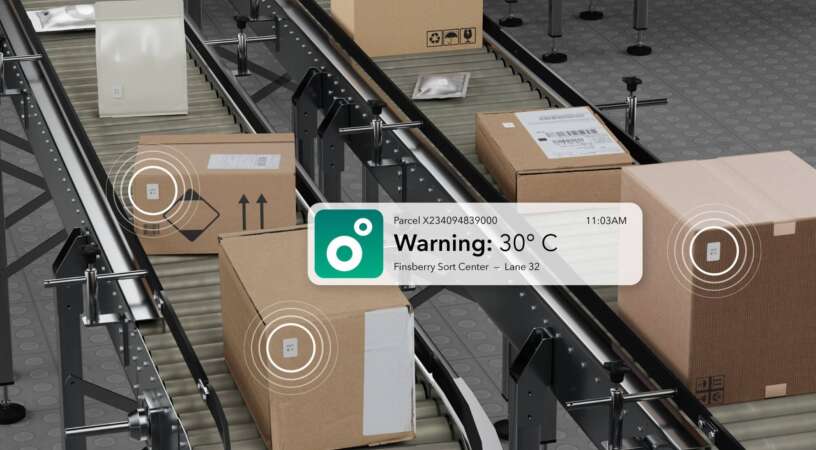
Real-time monitoring - The continuous communication afforded by IoT technology provides the basis of real-time monitoring and visibility of items as they move through the supply chain, generating critical and timely alerts to ensure shelves are never left empty. Items’ location and condition can be tracked efficiently at every point to provide decision-makers with timely, valuable insights that can be instrumental in streamlining and improving inventory management.
Automated reordering - A comprehensive IoT inventory management system can be configured to automate a company’s restocking procedures. Real-time inventory data acts as an always accurate guide to current stock levels which can be addressed proactively to avoid empty shelves, shortages, or overstocking throughout all participants in the supply chain.
Shrinkage prevention - Shrink or loss of inventory can result from a number of factors, from theft by customer and staff, to waste/spoilage, and losing track of items. Understanding where inventory has moved and when has been shown to drastically cut all these forms of shrink.
Improved operational efficiency - IoT inventory management techniques can be instrumental in generating alerts to minimize or eliminate mis-picks, mis-sorts, and mis-shipments in the distribution. While real-time alerts can stop these errors from happening upstream so the right items end up in the right places, they can also be used to notify staff when the wrong item ends up in their store and inventory can be adjusted in real-time. This functionality ensures the timely delivery of items to effectively address customer expectations by having products available for consumers.
Enhanced decision-making - Information provided by an IoT inventory management system promotes enhanced decision-making that can streamline a company’s supply chain. Real-time data enables businesses to quickly react to unanticipated emerging trends and customer demands. Companies can avoid shortages and optimize the availability of products to distributors and consumers.
Implementing IoT in Your Inventory System
Successfully implementing an IoT enabled inventory system is best accomplished with a methodical approach incorporating the following steps.
Develop a vision and assemble a cross functional team empowered to execute the project with the appropriate executive sponsorship
Define the business objectives of the system including the types of items you will be tracking and the granularity required to meet requirements. Sequence the plan using a phased approach to balance the dependencies, investments and time required with the use cases that drive the biggest benefits to the stakeholders that are critical to the project
Choose the IoT technology that best aligns with your business requirements. Factors to consider include aligning with the development of future wireless and data standards, the durability of the deployed IoT devices, sensing capabilities, transmission range and duty cycle (once a second / once a minute broadcasts), compatibility with existing solutions, and power requirements. Wiliot IoT Pixels provide a flexible and battery-free alternative to traditional IoT solutions.
Refine the businesses processes, including labor savings, to accommodate the new technology. Consider how to associate the tags used with the metadata or Digital Product Passports that will be associated with each item being tracked
Install the infrastructure required to read or sense the tags
Integrate the required IoT software or visibility platform with the warehouse management and supply chain systems software that will deliver real-time location information on items in the supply chain.
Leverage the data collected by the system to provide decision-makers with insights that allow them to optimize their supply chains.
Train staff members who will use the system so they can maximize the benefits it provides.
Plan and conduct proactive maintenance to keep the system running optimally.
Challenges and Solutions When Implementing IoT Inventory Management Systems
Organizations may encounter several challenges when implementing an IoT inventory management system.
IoT devices may need periodic maintenance to replace batteries and ensure connectivity and communication. Initiating a program of proactive maintenance will address issues before they impact. Implementing the Wiliot Data Visibility Platform with battery-free IoT Pixels eliminates the need to replace batteries, significantly reducing the cost of maintaining the system.
It can be challenging to integrate IoT devices with current inventory management systems. Companies should make sure the devices they plan to implement has the appropriate integration with existing systems and perform testing before rolling out the solution.
Organizations need to protect the security and privacy of the tremendous amount of data generated by IoT inventory systems. This can be accomplished with strong encryption policies and robust authentication measures that restrict access to devices and data to authorized personnel.
Scalability concerns can crop up if the system is not properly designed. Inefficiencies caused by the introduction of additional devices can stress resources and degrade system performance. Companies should consider cloud-based platforms that are easily scalable to meet changing business requirements.
Companies may be concerned with the initial cost of implementing an IoT inventory system. A cost-benefit analysis should indicate the long-term savings from enhanced efficiency, decreased waste, reduced labor cost, and so on, to warrant the investment.
Resistance to change may be a challenge for some companies. The best solution to this dilemma is to provide training so employees understand the benefits of the new system and their role in maintaining an efficient supply chain.
Checklist for a Successful Deployment
The following checklist offers guidance for performing a successful deployment of an IoT inventory system.
Define clear objectives that will be obtained by deploying the system.
Assess the current IT environment to identify potential compatibility issues.
Select IoT devices that address your objectives, which may include sensing the condition of an item in addition to its location.
Implement strong security protocols to protect data and control access to IoT devices and systems.
Coordinate data collection and alerting process with management and analytical tools to provide actionable insights to company decision-makers.
Ensure the system integrates successfully with other IT systems such as ERP or IMS solutions that ingest the information it provides.
Test the system to validate connectivity, accuracy, and performance. Begin testing with a limited scope to minimize troubleshooting complexity.
Design the system to use scalable cloud platforms to address future growth.
Continuously monitor the system to identify potential problems and areas where performance can be improved.
Initiate a proactive maintenance program to address the needs of the IoT devices deployed in the solution.
Provide training to all staff members who will interact with or use the system.
A Case Study
Following are some of the details of a successful implementation of the Wiliot Data Visibility Platform to strengthen a retailer’s inventory management. Further information can be found by downloading the full case study.
The retail pharmacy industry in the United States has grown and includes providing services and products, such as vaccinations, that require stringent quality controls. Maintaining an efficient supply chain can be challenging with the industry’s typically limited staff. An inventory management system based on this visibility platform effectively addressed multiple issues plaguing the industry including:
How bins of merchandise are handled throughout the supply chain;
The location of individual bins;
The temperature of a bin at each stage of the supply chain;
The temperature of individual pharmaceuticals and the duration they were stored at that temperature.
The information provided by the system enables establishments to ensure the safety of pharmaceuticals and meet regulatory guidelines. This data also enables the company to proactively address stocking issues to keep items on the shelves and maintain a high level of customer satisfaction.
Industry Applications
While implementing an IoT inventory management system can benefit the vast majority of businesses, its advantages can be especially impactful in certain industries or market sectors.
Retail - Retail establishments, as well as the producers and distributors that serve them, can obtain significant business benefits from IoT inventory management. The ability to granularly track inventory, whether pallets, cases, or individual products, can result in improved store and supply chain efficiency and the ability to meet customer expectations. This builds customer loyalty and increases sales by having items available for purchase at all times.
Manufacturing - The manufacturing sector depends on a supply chain that can ensure the timely delivery of raw materials and components. The real-time visibility of where items are located offered by IoT systems enables manufacturers to make informed decisions to optimize production and minimize shortages of essential parts or ingredients. This leads to more efficient processes and the ability to meet customer demands.
Healthcare - Supply chain inefficiencies in the healthcare industry can negatively affect patient experiences and outcomes. Understanding where products are in the supply chain or even in the building, and being able to quickly reroute or locate critical items is essential for healthcare providers. IoT inventory management offers the detailed information necessary to optimize the healthcare supply chain and deliver critical care to patients.
An additional benefit of IoT inventory management is the ability to customize solutions to align with specific business requirements or objectives. An example is the flexibility of tags such as Wiliot’s IoT Pixels which make them suitable for a wide variety of implementations. The Pixels can be attached to large shipping containers, boxes within the containers, or individual items so they can be tracked with real-time location data. IoT Pixels allow virtually any product or item to have a “digital twin” that can be tracked as it moves through the supply chain.
Future of IoT in Inventory Management
IoT technology will continue to evolve and provide additional functionality and benefits for inventory management. Following are some of the advancements to expect in the IoT field.
Integration with edge computing and AI technology will automate efficiency and responsiveness by eliminating the need to communicate with distant systems.
5G connectivity provides higher speeds and more consistent data transfer to support bandwidth-intensive applications and simultaneously connect more devices to a system.
IoT technology can be used to create digital twins that replicate physical objects or systems. A digital twin of a warehouse can offer new insights into how to optimize the flow of items as they move through the facility.
Increased security can be provided by implementing the decentralized and immutable data storage available through blockchain technology. The blockchain ensures data integrity and supports the secure transmission of data between IoT devices.
Smarter sensors and actuators will enable more precise monitoring of an item’s condition and transmit more complex data. Tracking characteristics such as temperature and humidity can help ensure products are in good condition when they reach their destination
Implementing an IoT inventory system provides organizations with real-time visibility regarding product location which leads to enhanced efficiency, improved data accuracy, and reduced costs. Wiliot’s Data Visibility Platform offers companies extremely flexible IoT devices that communicate with the cloud to provide actionable insights into inventory status and the movement and condition of individual items.
FAQs
What are the major drawbacks associated with manually scanning inventory?
Several drawbacks are associated with manually scanning inventory including:
The possibility of errors as items may be missed by the scanning process;
Slowing down item movement by requiring scanning to be done at designated locations which become chokepoints in the supply chain;
The inability to granularly track the movement and condition of individual items end-to-end.
Why does an IoT solution rely on cloud connectivity?
An IoT solution relies on cloud connectivity to transmit the data obtained from sensors to a centralized application that processes the information. Using wireless technology and the cloud, Bluetooth solutions such as Wiliot Data Visibility Platform provide seamless connectivity that supports deriving real-time insights into an organization’s inventory.
Why should security be a concern regarding IoT implementations?
Security should be a concern regarding IoT implementations because of the increased attack surface introduced by connecting IoT devices to an IT environment. Each IoT device offers a gateway into a company’s infrastructure that can be exploited by threat actors. Organizations need to ensure that only authorized personnel or processes can interact with their IoT devices.


%201.svg)

%201.svg)

%201.svg)
%201.svg)
.svg)


.svg)
.svg)

.svg)
.svg)

%20(1)%20(1).jpg)

.avif)



.avif)





.webp)