By Zach Lowman, Head of Channel Marketing, Wiliot
As packaging professionals gather in Chicago for Pack Expo 2026, Oct. 18-21, they do so at an especially innovative time. Packaging itself has always been part of the supply chain’s physical infrastructure. It protects products, enables transportation, supports distribution, and communicates information about what’s inside. But a new role is emerging.
Now, packaging can be part of the digital infrastructure, too. “Connected packaging” offers a continuous source of data about products and the conditions they encounter, thanks to Physical AI and Wiliot IoT Pixels.
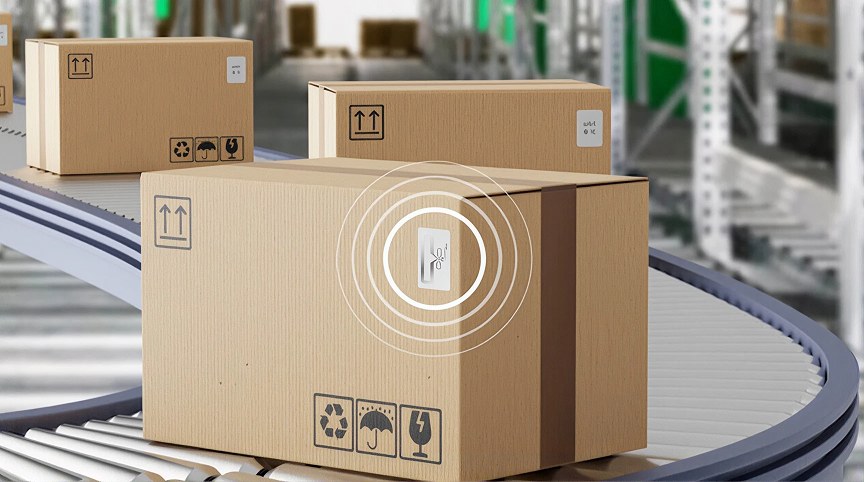
By embedding wireless connectivity and sensing into boxes, cases, containers, totes, and labels, packaging can deliver a steady, real-time stream of information about what’s happening throughout the supply chain. For packaging companies, this is an opportunity to deliver more value to customers — not only through better, smarter packaging, but also by making packaging itself a source of supply chain intelligence.
Connected Packaging Tells Stories
Consider a case containing 32 individual packages of macaroni. Today, that case may have an identifier, but the identifier doesn’t necessarily provide continuous visibility into the case as it moves from manufacturer to distributor to retailer. A connected case – one with wireless tracking and sensing integrated – provides a persistent digital identity while automatically generating information about its movement through the supply chain.
Now consider a case of perishable goods. Berries, perhaps. Knowing where this case is can be useful. But knowing how long it’s been sitting at a particular location, or the varying temperatures it has experienced along the way, is considerably more valuable.
Temperature and dwell time are particularly important because physical supply chains are full of events that are difficult to observe continuously. Products wait on loading docks. They move between facilities. Delays happen. Conditions change.
Traditional identification technologies can establish that a packaged product or case exists somewhere. Connected packaging can provide a much richer picture of what happens to it along the way. The package itself can become a source of supply chain data.
Packaging as a Data Platform
The broader opportunity extends beyond adding a connected component to a box or container. It’s about changing what packaging represents commercially. And creating a path toward packaging as data infrastructure.
The first step is relatively straightforward: make the package connected. Over time, packaging companies could build services around the data generated by those connected packages, creating recurring value alongside the physical products they already sell.
This evolution won’t happen overnight. Building a data-services business requires new capabilities, business models, and organizational commitments. But the underlying proposition – that a package generating useful supply chain data is more valuable than one that simply contains a product – is understandable today.
The opportunity, then, is bigger than “smart packaging.” Packaging can become a node in the supply chain’s information architecture, connecting products to locations, conditions, events, and ultimately the systems that use the information to make decisions.
And companies don’t have to replace the supply chain technologies they’re already using.
Connected Packaging Doesn’t Have to Replace RFID
RFID has demonstrated value, particularly for applications such as inventory management. But RFID-based visibility typically depends on readers being deployed where identification events need to be captured. That makes it less suited to providing continuous visibility across every stage of a supply chain.
Physical AI can extend that visibility. Using Wiliot IoT Pixels, which are the basis of supply chain Physical AI, companies can combine RFID at one level with Wiliot at another to create a more comprehensive view of products and their journeys through the supply chain.
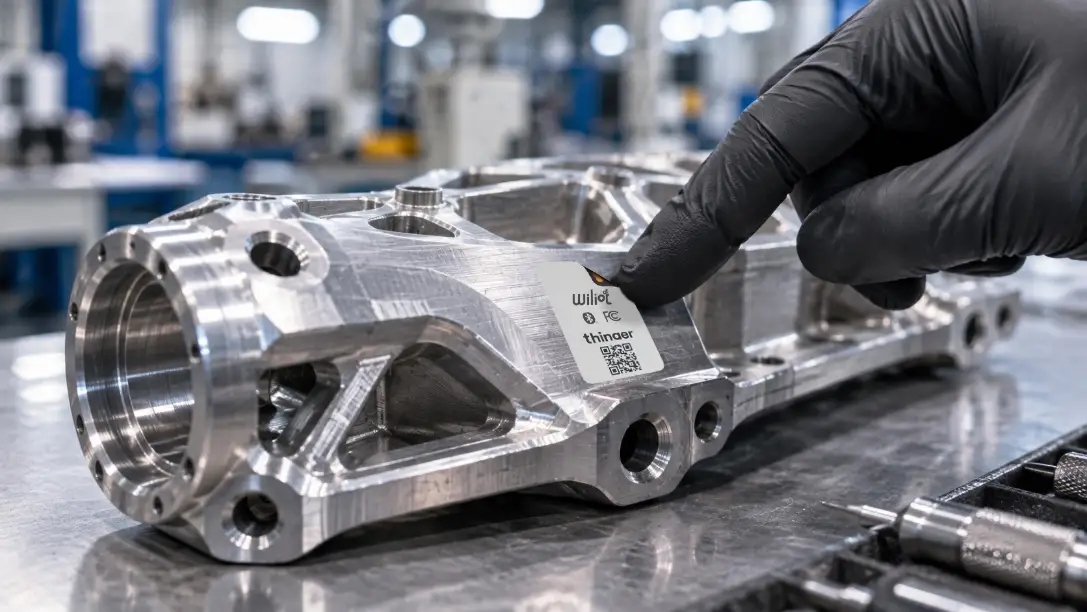
IoT Pixels are stamp-sized, battery-free sensors that communicate data over Bluetooth. They require no active scanning and can be affixed to packaging or embedded during manufacturing.
In the supply chain, for example, individual products can carry RFID tags for inventory management purposes while cases containing those products can have IoT Pixels. The identifiers associated with the individual items can be linked to the digital identity of the case, connecting item-level inventory data with case-level location and environmental data.
That data can include information such as temperature and humidity, providing insight that traditional identification alone cannot.
This approach can be particularly compelling for packaging companies because the case, container, or other unit becomes an intelligent link between products and the broader supply chain.
Start Where the Value is Clearest
Not every package needs to become connected immediately. Reusable containers, totes, and roll cages are natural starting points because they move repeatedly between locations and are continually reassociated with different contents. Connecting these assets through Physical AI can provide visibility into where they are and how they are being used.
Case-level packaging represents another compelling opportunity, particularly for perishables and other products where timing and environmental conditions matter.
At this level, connectivity can provide information automatically rather than requiring workers to repeatedly scan packages or manually record events. Wiliot IoT Pixels can be incorporated into a label or embedded into packaging, turning the package into an always-on source of data.
And that’s an important distinction. The goal is not simply to put a digital identifier on more packaging. It is to create an infrastructure through which packaging can continuously contribute information to the supply chain.
A “Virtuous Cycle” of Connected Packaging
For this vision to become reality, packaging suppliers and their customers should move together. Demand for connected packaging creates a virtuous cycle: customers request it; packaging suppliers incorporate the technology; and the resulting data infrastructure enables new applications and services.
Connected packaging represents an evolution driven not just by the physical characteristics of packaging, but by the value of the information packaging can generate. Packaging can evolve from physical infrastructure into digital infrastructure – an increasingly important role as companies use automation, analytics, and AI to optimize their operations.
After all, digital intelligence depends on timely, reliable data about what’s happening in the physical world. Connected packaging provides that data.


%201.svg)

%201.svg)

%201.svg)
%201.svg)
.svg)


.svg)
.svg)

.svg)
.svg)


.avif)




.avif)





.webp)