The Building Blocks of a Smart Supply Chain
For smart supply chains to be effective, they must integrate several components to enable real-time tracking, automation and increased efficiency.
Tags and Sensors
The foundation of an intelligent and connected supply chain consists of tags and sensors attached to assets, such as pallets or returnable transport items (RTIs). They are essential for collecting and transmitting data regarding the movement of these items. With tags and sensors in place, smart supply chains can enable tracking and serialization of shipments in real-time, creating a connected infrastructure.
Tags and sensors can take various forms. Traditional tracking devices include 1D and 2D barcodes, RFID tags, and Bluetooth beacons. Wiliot’s Ambient IoT Pixel is an innovative solution that leverages Ambient IoT for supply chain management.
- Barcodes are an inexpensive option, but require manual optical scanning to track inventory.
- Radio Frequency Identification, (RFID) requires costly infrastructure or manual scanning.
- Bluetooth beacons have significantly higher unit costs, but do not require an expensive infrastructure as the beacons allow for real-time sensing.
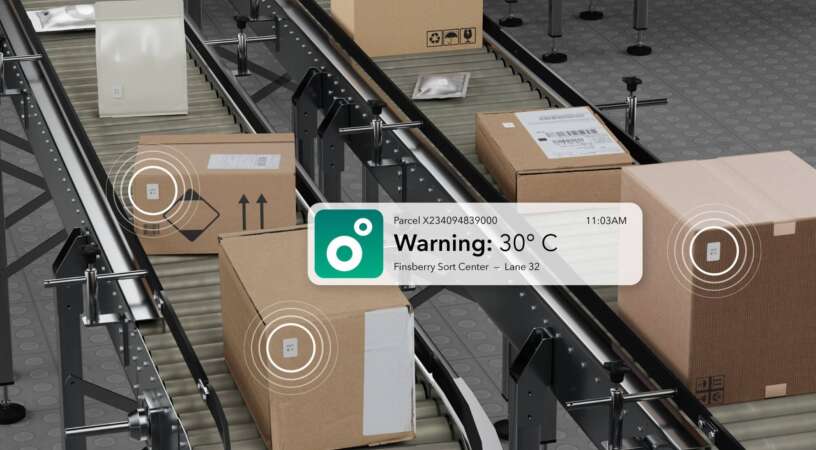
- Wiliot IoT Pixels are affordable, battery-free and can quickly deploy with existing bluetooth infrastructure and feed into smart supply chain platforms. The Wiliot IoT Pixels create digital twins of assets or cases with real-time data, while providing temperature information on perishable goods.
Data-Driven Infrastructure
When developing a smart supply chain, a connected infrastructure is required to monitor your assets. It can include handheld scanners, RFID gates, bluetooth gateways and Ambient IoT devices - such as Wiliot. The foundational sensors are connected to the internet to transmit data from the tags to existing supply chain management (SCM) platforms. This data-driven infrastructure provides organizations with actionable insights into their supply chains, fostering informed decision-making.
Depending on scanning/tagging methodology, the correct infrastructure is required to monitor your SCM platform in real-time.
- Optical scanners are used primarily with 1D and 2D barcodes.
- RFID implementations may utilize RFID gates in place of or in addition to handheld RFID scanners.
- Most Bluetooth beacons interact with Bluetooth gateways for connectivity. Some have their own cellular connection (though this results in even higher unit costs).
- Ambient IoT devices like Bluetooth gateways, hubs, or access points are used for energizing and reading Wiliot’s IoT Pixels, typically providing more flexibility than other solutions.
The proper combination of tags, sensors, and infrastructure is necessary to support the data collection and transmission required by a smart supply chain. Wiliot IoT Pixels offer a scalable and flexible method, by collecting real-time data and leveraging a large ecosystem of compatible bluetooth-enabled devices.
Key Technologies Powering Smart Supply Chains
Intelligent supply chains are driven by several key technologies to provide insights into real-time data, enabling informed decision-making.
Digital Twins for Inventory and Assets
Digital twins are dynamic digital models that represent physical supply chain assets. A digital twin feeds data to inventory systems and SCM tools, supporting analysis and generating actionable insights into the supply chain. Companies can utilize digital twins to support advanced use cases such as Digital Product Passports (DPPs) to collect and share information throughout a product's entire lifecycle, enhancing product transparency and sustainability.
The effectiveness of a digital twin is directly tied to the quality of data used in its creation. Organizations that continuously update their digital twins with real-time data gain accurate and actionable insights, more than those relying on periodic snapshots of their supply chain.
Operational Intelligence and Automation
Automation is a crucial component of a smart supply chain. Operational intelligence platforms provide the data necessary for logistics workflow automation, improving inventory accuracy and operational efficiency. The workflow automation is enabled by the tag, sensors, and data-driven infrastructure, which data to SCM platforms.
An automated workflow solution reduces time spent on scanning, and frees up resources to improve supply chain accuracy and reduce shrinkage. The automation process also improves accuracy by eliminating human error and oversights, reducing shrinkage, and enabling more efficient forecasting to ensure product availability. With today's complex supply chains, enterprises must leverage automation via tags, sensors and infrastructure to feed real-time data to SCM platforms.
Machine Learning and Predictive Analytics
AI and machine learning (ML) for supply chain management are essential technologies that support the intelligence modern organizations require and enable teams to use predictive analytics for supply chains. With AI and ML applications, SCM data is processed from tags, sensors and infrastructures which allows for predictive analytics to provide benefits including:
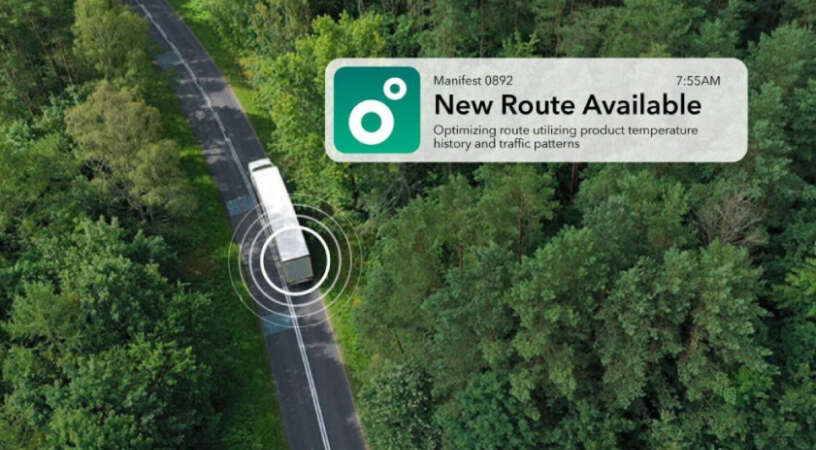
- Forecasting delays and disruptions for optimal utilization of trucks and other assets;
- Enabling demand planning to maximize inventory availability;
- Recommending anticipated repairs to support predictive maintenance on assets to avoid shortages that impact business operations.
Smart Warehouse and Inventory Optimization
Smart warehouse solutions are a primary application of intelligent supply chains. Supply chain digitization enables automation and improved inventory visibility to intelligent warehouse management solutions. Companies benefit from automated inventory tracking using technologies such as RFID and Bluetooth, and can enable a scan-free architecture using Wiliot’s IoT technology, ensuring optimal levels of products and assets at all times.
Supply chain optimization technology reduces item and asset shrinkage by providing real-time location information, improving asset management, saving replacement costs, all while unlocking new operational efficiencies. Organizations moving perishable items through their supply chains can ensure the freshness and quality of their products, maintaining high levels of customer satisfaction. Smart warehouses and inventory optimization provide companies with modern solutions to enhance competitiveness and boost revenue.
Benefits of a Wiliot-powered Smart Supply Chain
Organizations adopting a Wiliot-powered digital transformation for supply chain management can expect to experience strong advantages that provide enterprises with a significant competitive edge over rivals who employ traditional supply chain management solutions.
- The Wiliot Intelligence Platform provides companies with end-to-end real-time visibility of item movement and condition.
- Enhanced visibility into the supply chain leads to improved inventory accuracy and operational efficiency.
- With improved visibility into supply chains, organizations can reduce asset and item shrinkage due to theft or mismanagement.
- The Wiliot Intelligence Platform supply chain automation tools streamline operations, reduce manual labor, and boost both efficiency and compliance.
- Superior visibility enables companies to reduce waste and limit carbon emissions by optimizing supply chain movement.
- The Wiliot solution seamlessly integrates with existing supply chain analytics platforms to promote enhanced data-driven decisions.
Use Cases and Industries Benefiting from Digitization
Organizations across various industries can benefit from implementing big data supply chain solutions. Digital transformation in logistics offers universal benefits for all companies, along with unique advantages for specific industries. In particular, companies operating in the retail, grocery, food and beverage, pharmaceutical, logistics, and parcel and post markets see the greatest incremental benefits.
The advantages to all organizations utilizing a smart supply chain include:
- Improving inventory accuracy.
- Reducing asset and product shrinkage.
- Increasing operational efficiency.
- Minimizing out-of-stock situations affecting customer satisfaction.
- Limiting overstocking that expends capital on excess inventory.
- Optimizing labor by freeing personnel from scanning to moving inventory.
Businesses such as those in food, beverage, and pharmaceuticals can track temperatures in cold chains to improve freshness, maintain quality, and ensure customer satisfaction.
Digitized logistics give healthcare organizations better control over asset tracking and cold chain monitoring, helping to protect product effectiveness and patient safety. They also strengthen the chain of custody for high-value items like life-saving vaccines.
By improving asset tracking, logistics companies can reduce losses, increase delivery accuracy, and cut down on misdeliveries while lowering costs.
Why Wiliot: The Platform for the Intelligent Supply Chain
Wiliot’s Intelligence Platform offers organizations a cutting-edge way to build a smarter, more connected supply chain using real-time data and IoT-driven automation. Companies considering a digital supply chain transformation can gain real-time supply chain visibility through three critical components of the platform:
Wiliot’s IoT Pixels are postage-stamp-sized computing devices that provide the foundation of an AI-powered supply chain solution thanks to real-time data-rich insights. These flexible devices are attached to or embedded in item packaging or assets, and communicate via Bluetooth with Bluetooth-enabled devices or network access points. The pixels power themselves by harvesting radio waves from nearby devices with no lifespan limits or battery maintenance tasks.
Wiliot leverages an Ambient IoT Ecosystem to transmit real-time data between IoT Pixels and the Wiliot Intelligence Platform, eliminating the need for expensive scanning devices and manual scanning processes required by traditional inventory tracking solutions.
The Wiliot Intelligence Platform transforms the raw data collected by the IoT Pixels into a scalable, AI-powered supply chain visibility solution. Wiliot’s Intelligence Platform analyzes data from IoT Pixels in real-time, and translates it into actionable insights for supply chain decision makers. The platform uses AI-based algorithms that learn and adapt over time to identify trends, events, and exceptions that impact supply chain management. Companies can transform their supply chain one product at a time, thanks to the fine-grained visibility provided by the platform.
FAQ
What is a smart supply chain?
A smart supply chain leverages technological solutions to provide enhanced visibility into inventory and asset movement throughout the supply chain. Organizations that implement a smart supply chain improve inventory and asset management, yielding significant business benefits. Companies must adopt an innovative supply chain approach to remain competitive in today’s challenging market.
How does digital transformation impact supply chain management?
Digital transformation impacts supply chain management by providing actionable insights that promote better decision-making, more accurate inventory counts, and more efficient asset tracking and allocation. Companies can obtain granular, real-time data from a modern supply chain supported by digital transformation. This data can then be analyzed by AI and ML applications to promote operational efficiency, sustainability, and improve the customer experience.
What technologies are used in smart supply chain solutions?
Multiple technologies are used to implement smart supply chain solutions. Digital scanning or sensing technology is required to provide raw data for inventory and asset tracking. Reliable digital networks are essential for transmitting this information to the cloud, where it can be processed. Advanced AI and ML algorithms, combined with cloud computing technology, transform the collected and analyzed data into actionable operational intelligence.
What is the role of IoT in supply chain management?
IoT technology plays a key role in smart supply chain management by facilitating the collection and transmission of inventory and asset tracking data. IoT devices, such as Wiliot’s IoT Pixels, provide a modern alternative to traditional scanning systems. Advanced supply chain management solutions leverage IoT networks to send raw data to the cloud, where it can be processed and analyzed by AI-powered platforms.
How does predictive analytics improve supply chain operations?
Predictive analytics enables better decision-making to support multiple improvements in supply chain operations. Teams can utilize predictive analytics to perform preventive maintenance, ensuring assets like trucks are always available. Organizations can make more informed demand forecasts and address emerging trends with greater agility by leveraging analytics software.
What is supply chain automation software?
Supply chain automation software is a technology solution designed to optimize and automate supply chain processes. Companies can utilize automation software to streamline inventory management, order fulfillment, data analysis, and other processes that were previously performed manually. Organizations can improve operational efficiency, reduce costs, improve inventory accuracy, and enhance responsiveness with effective supply chain automation software.
What is a digital twin in supply chain management?
A digital twin in supply chain management is a digital model of a physical supply chain. Companies can utilize a digital twin to analyze their operations and pinpoint areas that require improvement. Organizations deploying a digital twin powered by real-time data can make informed decisions that would be impossible using traditional supply chain management methods, for a substantial competitive edge. Digital twins are also used to create Digital Product Passports.
What are the benefits of connected supply chains?
Connected supply chains provide organizations with several benefits by digitally linking all participants through system integration, communication, and real-time data sharing. Companies gain enhanced visibility throughout the complete supply chain. Organizations can increase their agility and ability to address supply disruptions or unexpected demand spikes. A connected chain may support greater sustainability and promote a superior overall customer experience.
What is logistics orchestration?
Logistics orchestration refers to the coordination, management, and optimization of all logistics activities across the supply chain. All aspects of the supply chain, such as transportation, warehousing, and inventory management, must work together to optimize business objectives. Successful logistics orchestration requires real-time visibility and dynamic decision-making to ensure efficiency and smooth operations.
How do smart warehouse solutions enhance efficiency?
Smart warehouse solutions enhance operational efficiency by improving inventory, asset, and employee management. Companies utilizing smart warehouse technology gain visibility into every item in the facility, enabling more accurate inventory management. Teams can track asset movement to avoid disruptions caused by lost or missing equipment. The automation of an intelligent warehouse streamlines manual processes, allowing employees to focus on more value-added tasks.


%201.svg)

%201.svg)

%201.svg)
%201.svg)
.svg)


.svg)
.svg)

.svg)
.svg)

%20(1).jpg)

.avif)



.avif)





.webp)