Parcel volumes keep climbing, delivery windows keep shrinking, and the pressure on carriers, postal operators, and 3PLs has never been higher. So it's no surprise that supply chain AI has moved to the center of nearly every post and parcel roadmap. Route optimization. Predictive sortation. Demand forecasting. Autonomous last-mile planning. The ambition is real, and the technology is genuinely capable.
But there's a gap that most of these initiatives quietly inherit. The AI making decisions about your network can't actually see the network. It sees a record of it — a scan that was logged, a manifest that was confirmed, a load that someone marked complete. What's physically happening to parcels and assets between those moments never makes it into the system. And AI can only reason over what it can observe.
That's the real constraint on supply chain AI in post and parcel today. Not the models. The data feeding them.
What "Supply Chain AI" Actually Runs On
Supply chain AI refers to the machine learning and reasoning systems that optimize how goods move — forecasting volume, sequencing routes, balancing capacity, flagging exceptions. In post and parcel, these systems are impressive at working with structured data: sortation logs, tracking events, delivery confirmations, network capacity records.
Here's the part that gets overlooked. That data is a record of what someone, or something triggered by someone, told the system happened. A barcode scanned at an induction point. A container marked loaded. A roll cage that was supposed to be returned to a depot. The physical reality of a parcel — where it actually is right now, what condition it's in, whether it ended up on the right vehicle — doesn't flow into the system on its own. It shows up only when a scan event creates it.
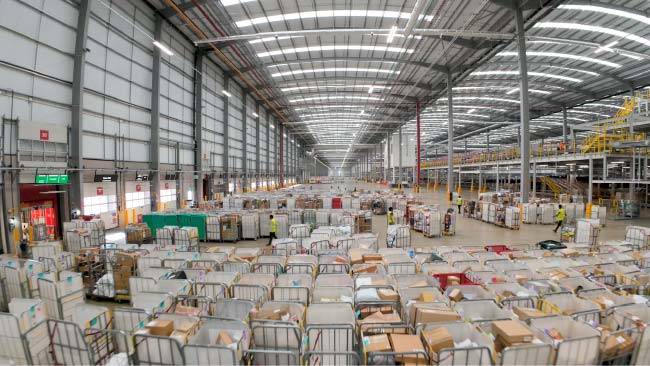
Between those scan events, the network goes dark. A parcel routed to the wrong sortation lane looks fine until it surfaces days later in the wrong region. A container loaded onto the wrong trailer isn't caught until the truck has already left. A reusable asset that walked out of the network is invisible until an annual audit says the fleet came up short. Those gaps are exactly where post and parcel loses money — in missorts, misloads, SLA penalties, and asset shrink — and they're the same gaps supply chain AI is blind to.
The Difference a Sensing Layer Makes
Closing that gap isn't a software problem. It's a sensing problem. This is what Physical AI was built to address.
Wiliot's Physical AI platform introduces a continuous sensing layer beneath the intelligence layer. Battery-free IoT Pixels — small, energy-harvesting Bluetooth sensors — attach directly to parcels, containers, and reusable assets. They draw power from ambient radio waves and broadcast a steady stream of signals: location, movement, temperature, dwell time. No manual scans. No battery changes. No human action required to generate the data.
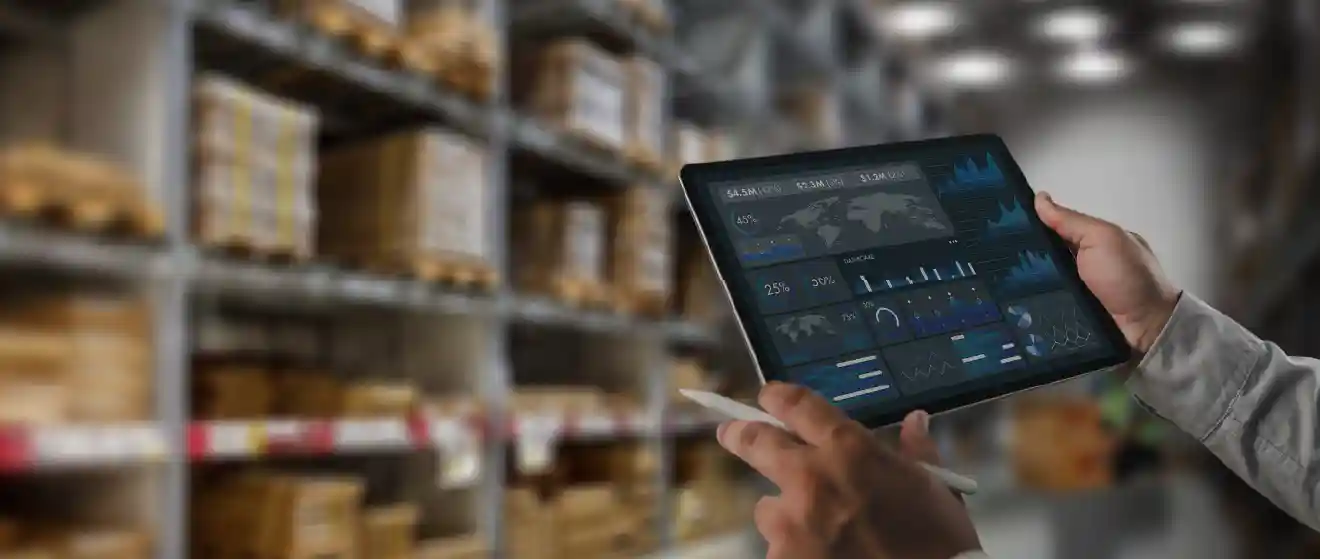
The result isn't a better tracking dashboard. It's a live, item-level picture of what's actually moving through the network, all the time — not just at the handful of points where a scan happens to occur. Traditional visibility in post and parcel is event-based: an induction scan, a depot arrival, a delivery confirmation. Those events tell you what happened at specific checkpoints. Continuous sensing tells you what's happening in between — which is precisely where missorts, misloads, and lost assets originate.
That distinction changes what supply chain AI can do. Feed a routing model continuous ground-truth data instead of periodic scan events, and it stops optimizing against yesterday's snapshot. It starts working from what's true right now.
Where This Shows Up in Post and Parcel Operations
Load and shipment accuracy
Missorts and misloads are among the most expensive errors in parcel logistics, because they're almost always discovered downstream — after a container is on the wrong trailer, after the vehicle has departed, after the customer files the complaint. Automated Shipment Verification continuously monitors what's staged at each dock door and flags the wrong container before the truck leaves. Even a 2–3% error rate can cost millions a year in expedited freight and recovery; catching it at the dock delivers up to a 90% reduction in mis-shipments, and it's five to ten times cheaper to prevent an error than to chase it downstream.
Reusable asset and RTI recovery
Roll cages, wheeled containers, pallets, totes, and mailbags are the circulatory system of a parcel network — and they leak constantly. Operators typically lose 10–15% of these reusable assets every year to shrink and poor visibility, then over-buy their fleets by 30–40% to compensate. Reusable Asset Tracking gives every asset a continuous voice across depots, vehicles, and returns, so stuck or missing assets surface early instead of at year-end. Royal Mail digitized its core delivery assets this way — using continuous sensing to gain visibility it never had before, cutting asset loss and protecting millions in fleet value.
Condition and handling visibility
Not every problem is a location problem. Fragile parcels, pharmaceutical shipments, and temperature-sensitive goods can be compromised by handling events and excursions that no scan ever records. Continuous condition monitoring captures temperature, humidity, and movement across the journey, so a problem is caught when it happens rather than surfaced as a damage claim later.
Toward autonomous operations
Every carrier talks about the autonomous, self-orchestrating network. But autonomy has a hard prerequisite: you can't automate what you can't observe. An agent that reroutes volume, triggers asset rebalancing, or escalates an exception is only as good as its view of physical reality. Give it a continuous sensing layer and those decisions rest on ground truth instead of a best guess.
This Works With Your Existing Systems, Not Against Them
A fair question: doesn't the WMS, TMS, or sortation platform already handle this? Those systems are essential, and Physical AI doesn't replace them. They capture defined moments — an induction, a load, a delivery — extremely well. What they can't do is see the space between those moments. Continuous sensing fills those gaps and feeds richer, real-time data back into the systems already running the operation. The scan-based network you have becomes a continuously aware one, without ripping anything out.
The Question Worth Asking First
If your post and parcel organization is investing in supply chain AI — routing engines, predictive sortation, autonomous planning — the most useful question to ask before the next initiative isn't which model to buy. It's: what is the AI actually able to see?
If the answer is scan events and confirmed manifests, the AI is reasoning over a network with known blind spots. Its recommendations will be bounded by what the system was told, and the exceptions it catches will be the ones that happened to make it into the data. The missorts, misloads, and missing assets that live between scans will keep happening.
Wiliot's Physical AI platform closes that gap by turning physical operations into a continuous stream of AI-ready data — every parcel, every asset, every movement, as it happens. The intelligence has always been capable. It just needed something real to see.
Ready to see your network in real time? Talk to Wiliot.


%201.svg)

%201.svg)

%201.svg)
%201.svg)
.svg)


.svg)
.svg)

.svg)
.svg)


.avif)



.avif)





.webp)