Modern organizations frequently face the challenge of monitoring complex supply chains. Traditional monitoring solutions are ineffective for several reasons. Gaps in data resulting from manual scans performed at chokepoints do not provide visibility inside trucks and facilities, where most disruptions occur. This type of tracking essentially creates snapshots of a supply chain and is not accurate for monitoring inventory location and condition.
A lack of data granularity also plagues organizations with supply chains. Most monitoring solutions examine the supply chain at the truck or shipment level, and are not capable of providing case-level location or condition data. The absence of case or asset-level monitoring significantly reduces the benefits of monitoring, especially when the supply chain involves perishable or high-value items.
Companies require real-time data on disruptions or incursions that impact their supply chains to optimize efficiency and mitigate risks. Decision-makers can leverage this information to take real-time action in response to potential misships/misdeliveries or shrink events. Organizations can operate from a position of strength with the enhanced visibility provided by real-time monitoring data.
Wiliot’s supply chain monitoring platform effectively addresses these issues, providing companies with real-time data on inventory location and condition. Wiliot’s solution combines battery-free Bluetooth pixels, an AI-powered Ambient IoT network, and advanced analytics in its Intelligence Platform. Companies can gain real-time, asset-level data throughout the supply chain, enabling them to improve operational efficiency and competitiveness. Organizations can reduce risks, save money, and maintain high levels of customer satisfaction with Wiliot’s supply chain monitoring solution.
What is Supply Chain Monitoring?
Supply chain monitoring is the practice of overseeing and managing all supply chain activities; including production, transportation, storage, and delivery of goods to their final destination.
Supply chain monitoring provides organizations with the following key benefits.
- Cost reduction - Companies can control costs by understanding details of their supply chains and taking appropriate actions to conserve resources and optimize inventory levels.
- Operational efficiency - Reliable monitoring data typically results in more efficient operations, as companies identify and rectify inefficient processes.
- Shrink reduction - Teams can reduce asset shrinkage through effective monitoring, minimizing the loss and theft of costly items.
- Risk mitigation - Companies can reduce the risks of supply chain disruptions, which can affect safety, product freshness, and competitiveness.
- Improved customer satisfaction - Effective monitoring enables companies to ensure that shelves are stocked and products are fresh, bolstering customer satisfaction.
- Enhanced traceability - Companies can track items as they move through the supply chain to improve chain-of-custody monitoring.
Specific industries stand to gain the most significant benefits from real-time supply chain monitoring.
- Retail businesses - must maintain appropriate inventory levels.
- Grocery stores - need to keep shelves stocked with fresh items.
- Logistics - (post and parcel carriers) improve efficiency by minimizing lost and misplaced assets.
- Healthcare and pharmaceutical companies - must ensure the safety and efficacy of sensitive or perishable items.
- Quick-service restaurants (QSRs) - should maintain inventory levels that closely match customer demand.
- Food manufacturers/processors/distributors - must coordinate the supply chain to maintain product freshness and consumer safety.
Challenges in Traditional Supply Chain Monitoring
Traditional methods of supply chain monitoring are hampered by several challenges that minimize their effectiveness. Organizations must address these to reap the maximum benefits of supply chain monitoring.
Lack of real-time monitoring data
Traditional monitoring techniques do not provide real-time data due to the limitations of the technologies employed in the process. These methods periodically create a snapshot of the supply chain. No additional data is provided on conditions between snapshots. The lack of real-time information hinders decision-makers' ability to take preventive actions to remediate potential shrink or excursion events.
Manual tracking inefficiencies
Supply chain monitoring methods traditionally relied on manual tracking to obtain visibility into inventory movement. Manual tracking is a labor-intensive activity that is prone to human error. The process only provides visibility at chokepoints. The lack of visibility between chokepoints presents dangers, especially for perishable items.
Difficulty monitoring supply chain performance
The combination of the lack of real-time data and inefficient manual tracking methods results in difficulties in monitoring supply chain performance and detecting disruptions. Organizations must navigate massive blind spots, regarding the location and condition of items in their supply chains. Teams may be making critical decisions based on inaccurate or stale data.
Limited visibility
The supply chain visibility provided by traditional monitoring and tracking methods is typically confined to shipment or truck-level data. Minimal end-to-end visibility is possible for ensuring case-level accuracy. The lack of visibility makes it difficult to monitor the condition of perishable items effectively, which can lead to spoilage and negatively impact customer satisfaction.
Wiliot’s Innovative Solution: Battery-Free IoT & AI-Powered Monitoring
Wiliot’s has built its innovative supply chain monitoring solution with the following three primary components.
1. IoT Pixels: Battery-Free Bluetooth Tags
Wiliot’s IoT Pixels are postage-stamp-size computing devices that power themselves by harvesting radio waves. The lack of batteries eliminates the need for maintenance, giving the Pixels a virtually limitless lifespan. The Pixels are delivered in a sticker form factor that can be attached to or embedded in any item. They offer a cost-effective solution for tracking assets and cases throughout the supply chain.
IoT Pixels automatically generate data through an Ambient IoT-based network. Companies can eliminate error-prone and inaccurate manual scanning for more efficient operations. IoT Pixels enable continuous tracking, providing real-time data on item condition and location in the supply chain.
2. AI-Powered Ambient IoT Network
The data generated by the IoT Pixels is transferred to an analytical cloud platform via a low-cost, ubiquitous Bluetooth-based network, eliminating the need for physical scanning. This network offers flexibility, enabling companies to monitor their supply chain at any or all points along the way. Wiliot’s solution leverages advanced AI in supply chain monitoring to continuously track and analyze events occurring within a supply chain, identifying disruptions and ensuring streamlined operations.
Real-time data enhances supply chain risk management by supporting AI-powered predictive analytics. Organizations can immediately identify, assess, and mitigate potential issues within their supply chains.
3. Real-Time Supply Chain Monitoring & Disruptions
Real-time, granular supply chain data is continuously transferred to Wiliot’s AI-powered Intelligence Platform. The Wiliot Cloud transforms the raw data provided by the IoT Pixels using machine learning algorithms into powerful and actionable insights, allowing companies to transform a supply chain one item at a time. The programs continually learn and improve over time to recognize trends, events, and exceptions.
Wiliot’s solution enables real-time monitoring of location and temperature in the supply chain, allowing for proactive decision-making to optimize operations. The following case studies illustrate the benefits of Wiliot’s AI-powered solution.
- Retail - An online retailer enhanced supply chain efficiency and reduced costs.
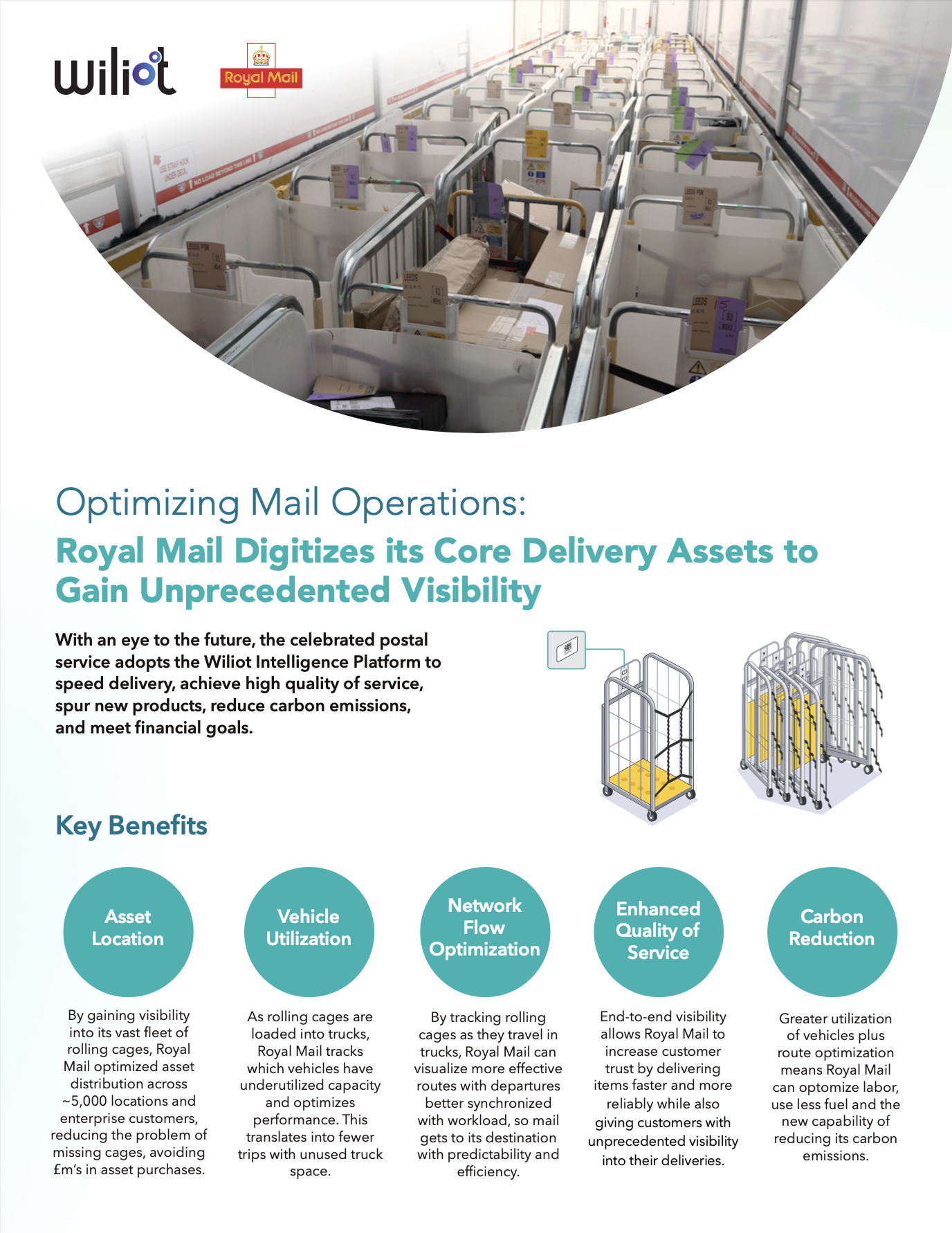
- Logistics - Royal Mail gains unprecedented visibility into its supply chain.
- Grocery - A leading grocery retailer provides fresher produce, reduces waste, and ensures adequate stocking.
Key Features of Wiliot’s Supply Chain Monitoring System
Wiliot’s advanced supply chain monitoring system offers companies multiple benefits over traditional tracking techniques. The following key features make Wiliot’s solution a superior method of monitoring the supply chain.
- End-to-end supply chain monitoring - Wiliot’s solution provides comprehensive monitoring of the complete supply chain, eliminating the information gaps associated with traditional monitoring methods. Companies can track the location and condition of their inventory throughout the entire supply chain, enabling them to enhance risk monitoring and detect disruptions in real-time.
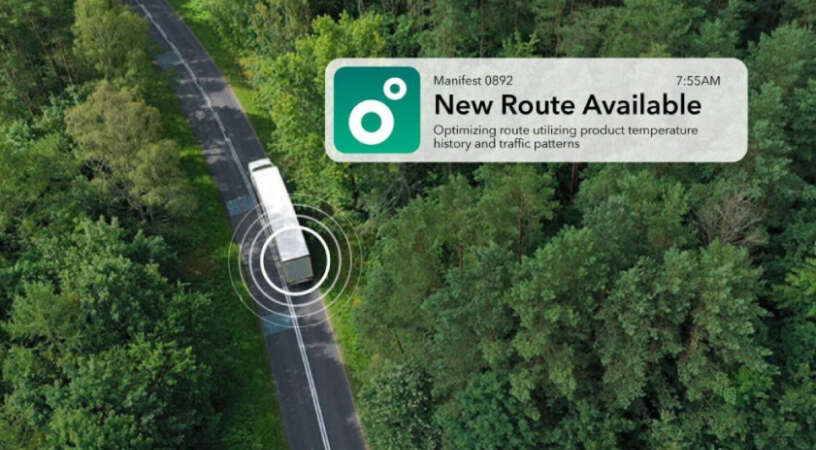
- Automated alerts - Wiliot’s Intelligence Platform can generate automated alerts when supply chain disruptions occur. The warnings enable teams to take preventive action and mitigate potential impacts on the supply chain in real-time.
- Seamless integration - The data generated by the Intelligence Platform can be integrated into existing supply chain monitoring systems to provide a more complete view of inventory movement.
- Limitless scalability - Wiliot’s IoT Pixels offer companies a scalable solution that can easily grow in line with their evolving monitoring needs. Businesses can start small, monitoring a single asset type, and expand the scope as the benefits of the solution become evident.
- Asset and case-level visibility - The Wiliot solution offers asset and case-level visibility, thanks to the small size and flexibility of the IoT Pixels. Companies can attach Pixels or embed them into virtually any supply chain item. The Pixels provide real-time data on assets, such as cases and returnable transport items (RTIs), which teams can leverage to generate actionable insights that improve supply chain efficiency and ensure product viability.
Industries Benefiting from Wiliot’s Platform
All organizations with a supply chain can benefit from Wiliot’s Intelligence Platform. Companies in some specific industries may find the solution especially beneficial.
- Retail businesses must ensure inventory levels align with customer expectations or risk losing business to competitors. Wiliot’s solution enables proactive intervention to avoid low stock situations.
- Grocery stores require effective cold chain monitoring to provide customers with fresh products or risk losing business to more enlightened competition.
- Logistics (post and parcel carriers) can improve efficiency and save considerable costs by minimizing lost and misplaced assets. They can also enhance customer satisfaction by providing real-time data on deliveries and delays.
- Healthcare and pharmaceutical companies must ensure the safety and efficacy of sensitive or perishable items. Wiliot’s solution provides the granular data that these industries require for cold chain monitoring.
- Quick-service restaurants (QSRs) must maintain inventory levels that closely match customer demand. Inconsistent inventory can result in dissatisfied customers and lost business.
- Food manufacturers/processors/distributors must coordinate complex supply chains to maintain product freshness and consumer safety. Real-time location and temperature data are essential throughout the food production and distribution industry.
How to Monitor Supply Chain Performance with Wiliot
Companies can implement Wiliot’s supply chain monitoring solution by adopting a methodical approach incorporating the following steps and best practices.
- Define areas of improvement in your supply chain. The organization may wish to enhance visibility into its cold chain, reduce delivery times, or improve inventory accuracy. It is essential to identify and focus on aspects of the supply chain that are affecting business operations.
- Ensure your supply chain monitoring tools easily integrate with existing systems and technologies to reduce inefficiencies. The information provided by the Intelligence Platform should be available to streamline other processes, such as purchasing and route optimization.
- Companies must clearly define KPIs and objectives before implementing new supply chain monitoring technology. These objectives serve as a template for evaluating the new solution and making modifications as necessary.
- Organizations must implement strong cybersecurity measures, such as encryption, to protect their data. IoT devices must be monitored to minimize third-party risks that can compromise data privacy, security, and accuracy.
Future of Supply Chain Monitoring with Ambient IoT
Ambient IoT promises to transform supply chain monitoring from a static to a dynamic process, leveraging IoT sensors and real-time data to provide constant location and other vital information on items during transit. Organizations that previously had to rely on sporadic snapshots of inventory movement will now have up-to-date information with which to make informed decisions affecting their supply chain and business.
AI and Ambient IoT will continue to play an increasingly vital role in supply chain monitoring systems. The data transmission capabilities of Ambient IoT are unmatched by other technologies, enabling the rapid generation of tremendous volumes of information. AI-powered software is essential for efficiently processing and analyzing this large amount of data. Wiliot’s solution combines these technologies into a comprehensive and innovative supply chain monitoring platform.
Why Wiliot
Wiliot’s Intelligence Platform is revolutionizing supply chain monitoring performance. The solution provides companies with continuous granular location and temperature data as items move through the supply chain. The information available from the Platform delivers actionable insights that decision-makers can use to optimize all aspects of the supply chain, enhance operational efficiency, and improve their bottom line.
Contact us to explore how Wiliot’s supply chain monitoring software can provide enhanced visibility and risk management for your company, giving you a competitive edge in today’s challenging business landscape.


%201.svg)

%201.svg)

%201.svg)
%201.svg)
.svg)


.svg)
.svg)


.jpg)

.avif)







.webp)